Key Takeaways:
An aircond costs roughly 4 to 11 times more to run than a DC ceiling fan: about 111 kWh a year for the fan at full speed every night, against 500 to 1,170 kWh for a 1.0 HP to 1.5 HP aircond over the same hours. Running both and setting the aircond 2°C warmer cuts its cooling energy by about 14%, but switching some nights to the fan alone saves far more.
Most homeowners assume the aircond is the expensive one and the ceiling fan is almost free to run. That's right, but the size of the gap depends on which aircond you own: a modern inverter unit costs about 4 times as much an hour as a DC ceiling fan, while an older non-inverter unit can cost over 10 times as much.
The average Malaysian household runs its aircond for about 5.4 hours a day, according to a 2025 Lawrence Berkeley National Laboratory study of the local market. In a landed home cooling 3 or 4 rooms, that's usually what pushes the bill up.
Below, we compare what a ceiling fan and an aircond cost per hour and per year, show how much running both actually saves, and explain when a fan alone is enough.
How Much Does a Ceiling Fan Cost to Run vs an Aircond?
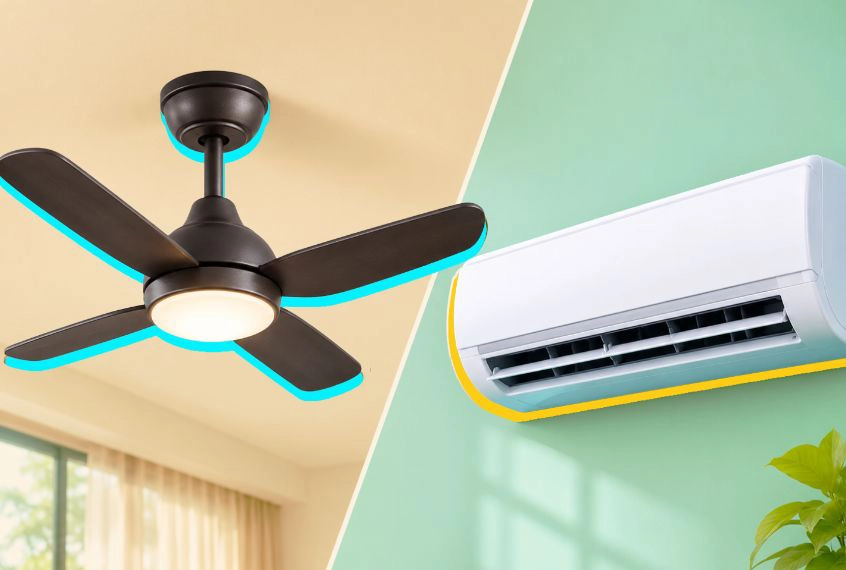
A DC ceiling fan costs under 2 sen an hour at full speed, while an aircond costs roughly 8 to 18 sen an hour, depending on its size and whether it has an inverter. Here's the comparison for a bedroom used 8 hours a night:
| Appliance | Average power | Cost per hour | Cost per year |
|---|---|---|---|
| DC ceiling fan, lowest speed | 4W | 0.2 sen | RM5 |
| DC ceiling fan, full speed | 38W | 1.7 sen | RM49 |
| AC-motor ceiling fan, full speed | 69W | 3.1 sen | RM90 |
| 1.0 HP inverter aircond | About 170W | 7.6 sen | RM222 |
| 1.0 HP non-inverter aircond | About 300W | 13.3 sen | RM388 |
| 1.5 HP inverter aircond | About 230W | 10.3 sen | RM300 |
| 1.5 HP non-inverter aircond | About 400W | 17.9 sen | RM522 |
Sources: fan figures from the Panasonic Bayu DC and AC-motor F-M14DZ specifications. Aircond figures are our estimates derived from LBNL's 2025 Malaysia study, which models 1.0 HP (2.6 kW) and 1.5 HP (3.5 kW) units under the ISO 16358 seasonal test, with inverters at CSPF 6.1 and non-inverters at CSPF 3.5. Costs use TNB's domestic base rate of 44.43 sen/kWh at 8 hours a night, before AFA, rebates and other charges.
Even the most efficient aircond here costs about 4.5 times as much to run as a DC fan at full speed, and an old 1.5 HP non-inverter costs over 10 times as much. These are standardised test averages, so a hot west-facing room, a low thermostat setting or a dirty filter pushes the aircond figures higher.
The CSPF 6.1 inverters in the table sit right at the 5-star line under the Energy Commission's 2026 rating thresholds, which start at CSPF 6.09 for units under 4.5 kW. If you're choosing a new unit, our ranking of aircond brands by running cost compares them on that label.
Why Does an Aircond Use So Much More Electricity?
An aircond pumps heat out of the room with a compressor, while a ceiling fan only moves air across your skin. Moving heat out of a room takes far more energy than stirring the air already in it.
That difference also tells you when each one works. A fan makes you feel cooler but doesn't lower the room temperature, so a fan left spinning in an empty room cools nobody. An aircond cools the room itself, which is why it keeps working when you can't feel a breeze.
The Energy Commission rates the two on different scales for the same reason. A 5-star ceiling fan has to move at least 3 m³ of air a minute for every watt it draws, while airconds are rated on how much heat they remove per unit of electricity. Our ranking of the best ceiling fans in Malaysia compares 7 DC models on power and airflow.
How Much Does Running a Ceiling Fan With Your Aircond Save?
Every 1°C you raise the aircond saves about 7% of its cooling energy, according to UPM's Faculty of Engineering dean speaking to Bernama, so a fan that makes a setting 2°C warmer feel comfortable cuts the aircond's energy use by about 14%. The fan's own running cost eats into that, though, so the numbers matter.
Here's what 3 setups cost in a bedroom with a 1.5 HP inverter aircond, 8 hours a night:
| Setup | Cost a year | Saving vs aircond alone |
|---|---|---|
| Aircond alone, every night | RM300 | – |
| Aircond 2°C warmer + DC fan on a mid setting | RM277 | RM23 |
| Fan only 2 nights a week, aircond the other 5 | RM228 | RM72 |
Calculation: 1.5 HP inverter at RM300 a year from the table above, 14% less aircond energy for a 2°C rise, a DC fan at an illustrative 15W on a mid setting (RM19 a year) and 38W at full speed on fan-only nights.
On an efficient inverter unit, the warmer-setting trick saves around RM23 a room each year: real, but modest. Switching just 2 nights a week to the fan alone saves 3 times as much.
The maths shifts on an older unit. With a 1.5 HP non-inverter, the same 2°C-plus-fan setup saves about RM54 a year, and replacing that unit with an inverter saves around RM222. Our comparison of inverter vs non-inverter aircon covers whether that upgrade pays off for you.
When Is a Ceiling Fan Enough?
A ceiling fan is enough when the room is already close to comfortable and you just need the air moving. A night on the fan alone costs about 14 sen, against roughly 82 sen for a 1.5 HP inverter aircond, so the cases where a fan does the job add up quickly:
- Cooler or rainy nights: when the outdoor air drops, moving air is often all a bedroom needs.
- Living areas with cross-ventilation: open windows on opposite walls let a fan pull fresh air through instead of churning warm air.
- Short stays in a room: a fan gives relief instantly, while an aircond needs time to pull the room's temperature down.
Keep the aircond for hot, still nights and for rooms that hold heat, such as west-facing bedrooms under the roof.
Does Using Less Aircond Help You Stay Under 600 kWh?
Yes, and for some homes that threshold matters more than the per-hour cost. TNB waives AFA and the retail charge at or below 600 kWh a month, and once you cross it, AFA applies to your full consumption, not just the part above 600 kWh, as our breakdown of how AFA affects your TNB bill shows.
A 1.5 HP inverter aircond running 8 hours a night uses about 56 kWh a month. Switch 3 bedrooms to the fan alone on 2 nights a week and you cut around 48 kWh a month, enough to pull a household sitting just above 600 kWh back under it. To see where your usage lands, run it through our TNB bill calculator.
For a deeper look at where every kWh on your bill goes, see our guide to understanding your TNB bill.
Bottom Line: Let the Fan Do More of the Work
A DC ceiling fan uses about 111 kWh a year at full speed every night, while a single aircond uses 500 to 1,170 kWh over the same hours. You won't swap the aircond out on the hottest nights, but every night you hand to the fan saves more than any thermostat trick, and every degree you add on the other nights trims a little more.
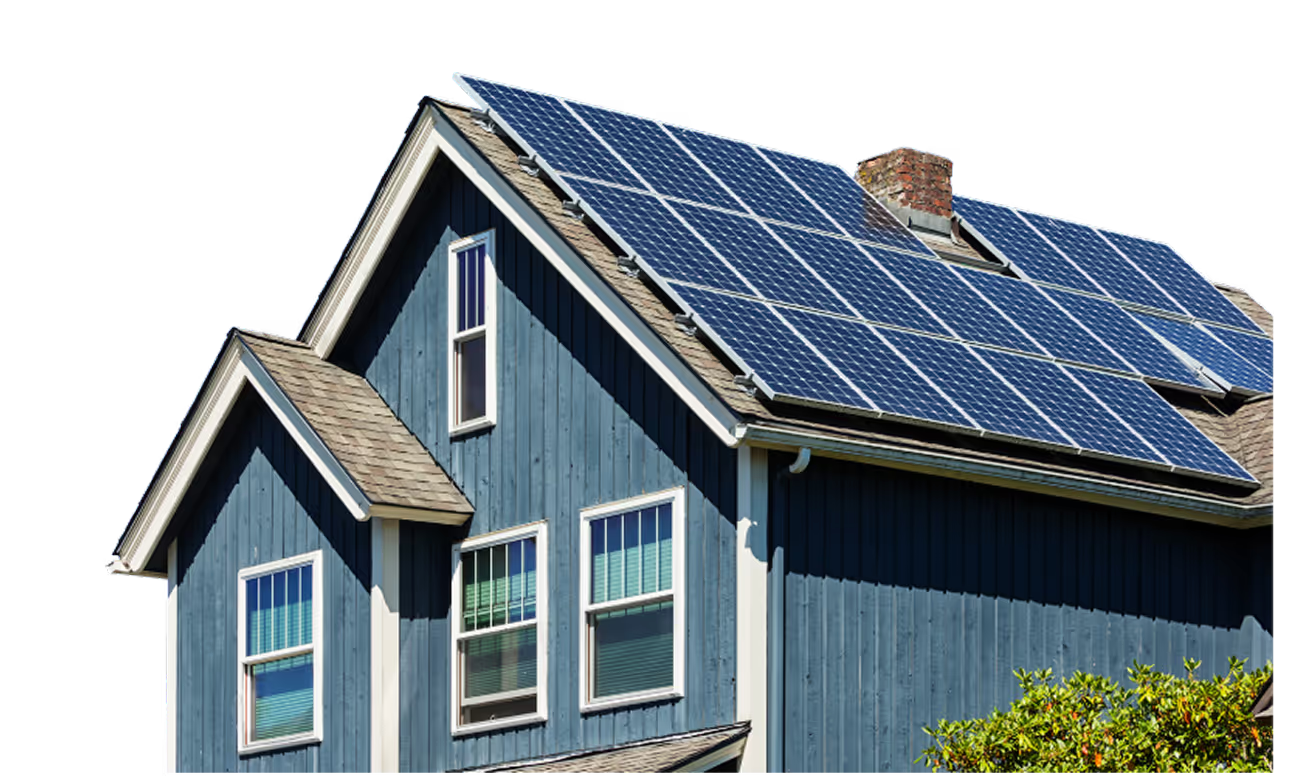
The aircond will still be the heaviest load on your TNB bill, especially in the afternoon heat. Rooftop solar can cover much of that daytime cooling: see how solar pairs with air conditioning, or get panels with Rent-to-Own at RM 0 upfront.
Check out our solar calculator or chat with the team on WhatsApp whenever you're ready.

Rent-to-Own Solar. RM0 Upfront cost. Guaranteed Savings
Immediate ROI



Rent-to-Own Solar. RM0 Upfront cost. Guaranteed Savings
(10-Year RTO plan)
+ 10-Year Free Maintenance

Be part of The Solar Collective, where we share the latest updates, tips, and discussions on solar energy.