Key Takeaways:
AFA works on one formula: your grid-imported kWh times the current sen/kWh rate, divided by 100. At August 2026's rate of +3.80 sen/kWh, that's RM0 for a 600 kWh household and RM76 for one importing 2,000 kWh, the same rate producing a different bill purely because ofusage. Solar changes the outcome by shrinking the number the formula multiplies against, not the rate itself.
TNB's AFA rate just climbed to +3.80 sen/kWh in August 2026, up from +3.59 sen/kWh in July. That single number is why your bill can rise even when your usage hasn't changed at all.
Most explanations stop at defining AFA. Few show you the actual math: how a sen/kWh rate becomes a real ringgit figure, at your specific usage level.
We break down the formula itself, and apply it across usage tiers from 600 kWh to 2,000 kWh, so you can work out your own exposure regardless of what the rate does next month.
For the full story on how AFA fits into your five-part bill, see our complete guide to the new TNB tariff structure.
What Is AFA, in One Line
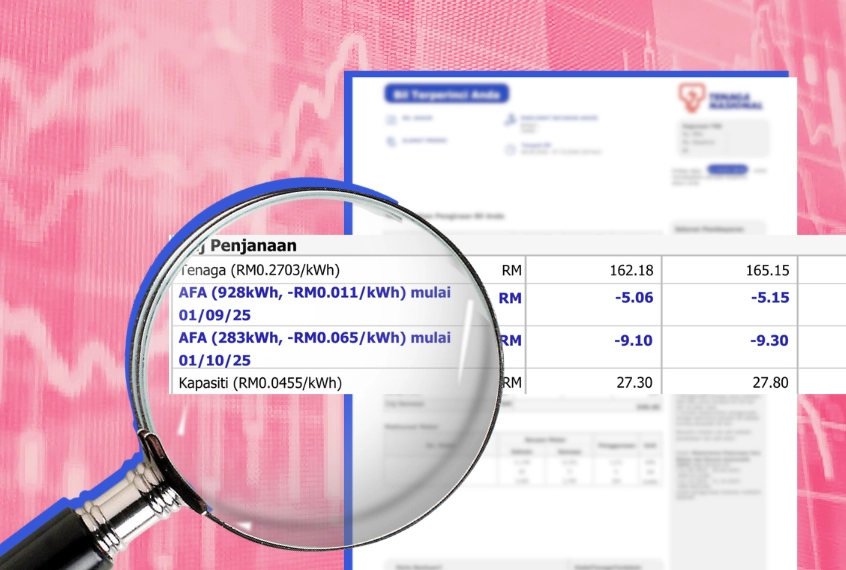
AFA (Automatic Fuel Adjustment) is the single component of your TNB bill that moves every month, replacing the old ICPT system since July 2025. It applies once your usage crosses 600 kWh, and unlike your generation, capacity, network, and retail changes, it never sits still.
In this video, we break down exactly how AFA works, why it can add to or subtract from your bill, and why bills over 600 kWh are the ones most exposed to it.
What matters for this guide isn't why it moves. It's how that monthly rate turns into a ringgit figure on your bill, which is the formula below.
The Actual AFA Formula
AFA (RM) = kWh imported from the grid × AFA rate (sen/kWh) ÷ 100.
That's the whole calculation. No hidden brackets within AFA itself, just your grid import multiplied by whatever rate the Energy Commission declares that month.
At August 2026's rate of +3.80 sen/kWh, a household importing 1,000 kWh pays: 1,000 × 3.80 ÷ 100 = RM38 in AFA alone.
Multiply your kWh by the rate, divide by 100, and you get your AFA charge.
The Sen-by-Sen Breakdown: AFA at Every Usage Level
Here's that same formula applied across usage tiers, at August 2026's rate:
Source: Energy Commission Malaysia (ST) AFA declaration, August 2026. Note: once usage exceeds 600 kWh, AFA applies to the full consumption, not just the portion above 600 kWh.
A 2,000 kWh household pays over 2.5 times more in AFA than one at 800 kWh. Same rate, same formula, but different exposure entirely because of usage.
Try It Yourself: Calculate Your Own AFA Charge
The table above uses round numbers. Your own usage almost certainly falls somewhere between them, so use the calculator below to plug in your actual kWh and see your exact AFA charge, at any rate TNB declares.
For the full monthly bill, including generation, capacity, network, and retail charges together, see our TNB Bill Calculator.
Why Households on the Same Rate Pay Completely Different Amounts
Because AFA scales with the number it's multiplied by, not the rate itself. Two neighbours on the identical +3.80 sen/kWh rate can pay RM30 and RM76 respectively, purely because one runs a second air conditioner.
The rate may be identical but the bill isn't. Your usage is what decides how much of it you actually pay.
What Happens When the Rate Flips?
The formula works in both directions. AFA can be a surcharge (positive) or a rebate (negative), and the calculation doesn't change either way, only the sign does.
Say the rate lands at -2.00 sen/kWh instead. A 900 kWh household would see: 900 x -2.00 ÷ 100 = -RM18.00, a rebate credited back rather than charged.
For what the rate has actually done month to month, including the rebate that dropped 78% in a single month and TNB's forecast for the months after, see our breakdown of the April 2026 AFA rebate change.
A rebate and a surcharge run through the identical formula. Only the sign flips.
Solar vs the AFA Formula: Reducing the Number That Matters
Solar itself doesn't touch the sen/kWh rate. What it changes is the other side of the equation: how many kWh you import from the grid.
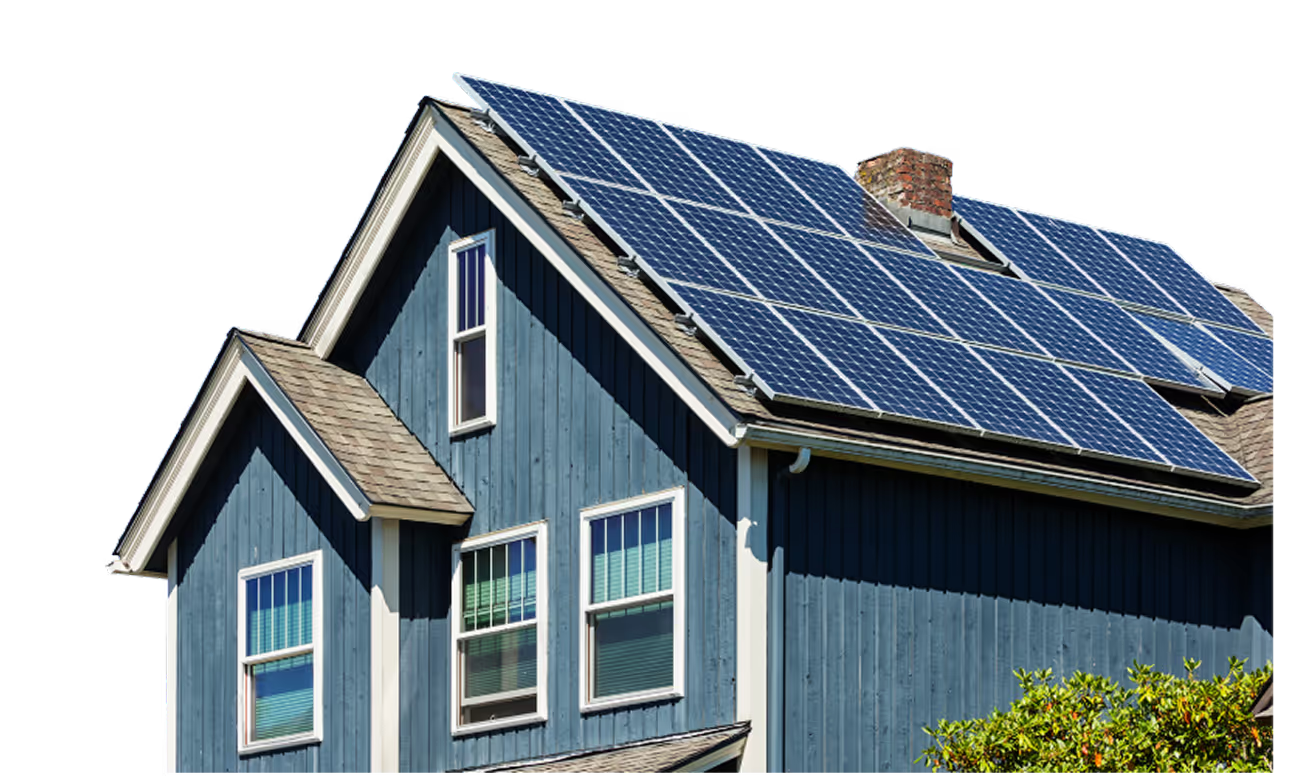
Under Solar ATAP, self-generated power reduces the units TNB actually bills you for import. If you cut your grid import from 2,000 kWh to 800 kWh, that same +3.80 sen/kWh rate now applies to a much smaller number: RM30 instead of RM76.
Solar doesn’t change the AFA rate but it can help you shrink the number the rate is multiplied against.
GetSolar's Rent-to-Own plan (RTO) makes this shift possible without upfront cost, a system sized to your usage, paid off through fixed monthly payments.
For a deeper look at system sizing and pricing for Malaysian homes, see our complete guide to solar panel costs in Malaysia.
The Rate Isn't Yours to Control. The Number It's Multiplied By Is.
TNB sets the AFA rate. You don't get a vote on whether it's +3.80 sen/kWh or -0.47 sen/kWh next month, and neither does anyone else.
What you do control is the other half of the formula: how many units you're importing when that rate lands. Reduce that number, and the same rate that costs a 2,000 kWh household RM76 costs you just a fraction of that.
Check out our free solar calculator to calculate your potential roof savings, or chat with the team on WhatsApp whenever you're ready.
Frequently Asked Questions
Does AFA apply to my whole electricity bill?
No. AFA is calculated separately from your generation, capacity, and network charges. It only applies once your usage crosses 600 kWh a month, and once it does, it applies to your full consumption, not just the portion above the threshold.
What is the TNB AFA rate, and how often does it change?
The TNB AFA rate changes every month. The Energy Commission (ST) confirms it, typically published 5 to 7 days before the new month begins, and it can be either a surcharge or a rebate depending on fuel costs and the ringgit's exchange rate.
Can I calculate my own AFA charge before my bill arrives?
Yes. Multiply your expected grid-imported kWh by the current rate, then divide by 100. For a fuller estimate including all 5 bill components, use our TNB Bill Calculator.
Does solar remove AFA from my bill entirely?
No. It reduces the kWh the formula applies to, not the rate itself. Homes on Solar ATAP still pay a fixed connection fee and any residual AFA on units still imported from the grid.

Rent-to-Own Solar. RM0 Upfront cost. Guaranteed Savings
Immediate ROI


Rent-to-Own Solar. RM0 Upfront cost. Guaranteed Savings
(10-Year RTO plan)
+ 10-Year Free Maintenance

Be part of The Solar Collective, where we share the latest updates, tips, and discussions on solar energy.