Key Takeaways:
Inverter air conditioner units usually cost RM300 to RM500 more than non-inverter equivalents in Malaysia, but independent studies put their electricity savings at around 30 to 40%. For a 1.5 HP unit running 8 hours a day, that works out to roughly RM45 to RM50 a month, meaning most households recover the price difference in under a year of heavy use.
If you’re in the market for air conditioners to beat Malaysia’s heat, you might have noticed that certain models cost noticeable more expensive than others. That price difference often comes down to whether you choose a standard unit or an inverter air conditioner. But is an inverter air conditioner truly the electricity saver manufacturers market it to be?
.webp)
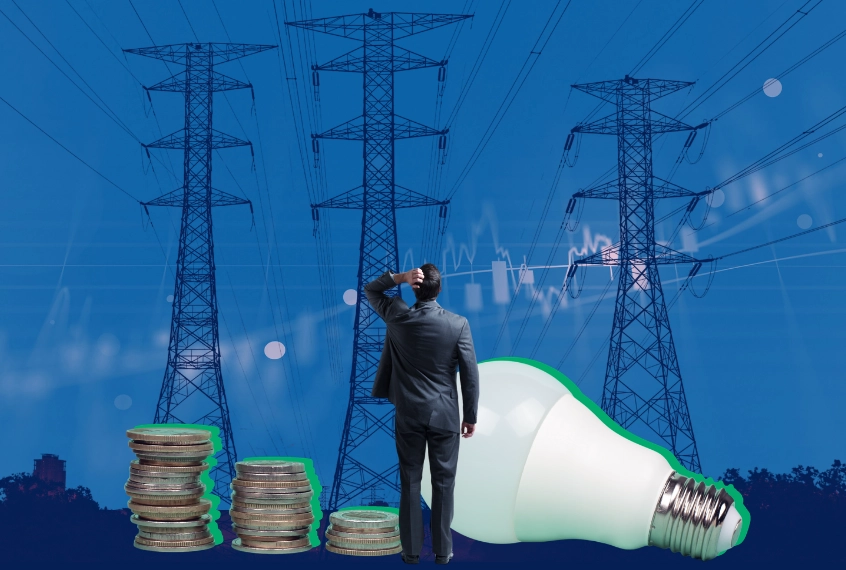
Aircons make up the largest chunk of most Malaysian TNB bills, and with tariffs at 27.03 sen/kWh on top of monthly AFA fees, cooling your home is getting pricier. Before you pay the upfront premium for an inverter air conditioner, you need to know if your actual usage pattern will ever earn that money back.
What's the Real Difference Between Inverter and Non-Inverter Aircon?
Traditional non-inverter models rely on fixed-speed compressors that cycle strictly on and off. They run at peak capacity until the room hits the target temperature, shut down entirely, and restart at maximum power when the room warms up again, drawing a large electrical load with every cycle.
.png)
An inverter air conditioner uses a variable-speed compressor that dynamically throttles back once the set temperature is reached. By eliminating continuous full-power restarts, an inverter air conditioner maintains precise climate control while cutting energy consumption.
How Much More Does an Inverter Aircon Cost in Malaysia?
Good news for buyers: the cost gap has narrowed significantly. Today, a 1.0 HP or 1.5 HP inverter unit costs just RM200 to RM500 more than its non-inverter counterpart. That’s a massive drop from the RM800 to RM1,000 price difference seen ten years ago.
Sources: BigGo Malaysia, acfix.my Aircond Guide (2026). Unit prices only, excluding installation.
How Much Does an Inverter Aircon Actually Save on Your TNB Bill?
Be wary of exaggerated savings numbers touted in advertisements. Brand marketing often claims an inverter air conditioner can slash power use by 50 to 70%, but those are best-case scenarios designed to sell pricier units. Peer-reviewed testing tells a more modest story: a six-week office comparison measured about 35% lower electricity use for an inverter unit of equal capacity, while a separate 108-day study logged savings of up to 44%. In a like-for-like comparison, treat 30 to 40% as the realistic range, not 50%-plus.
Source: KL Renovator, TNB domestic tariff (RP4, effective 1 July 2025–31 December 2027).
That RM48 gap only widens as your monthly usage climbs past 600 kWh, since that's the threshold where the AFA surcharge and retail charge kick in on every additional unit you draw. Run the numbers on your own bill with our TNB bill calculator before you decide.
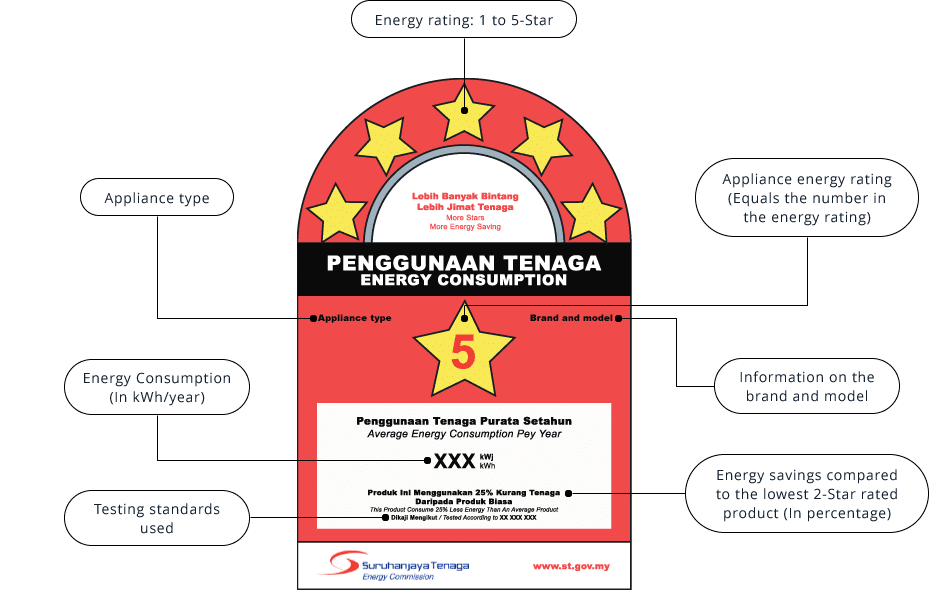
Also, keep an eye on the yellow MEPS star-rating label present on your AC unit. Suruhanjaya Tenaga tightened MEPS standards in January 2026, meaning a 5-star inverter air conditioner on shelves today delivers better energy performance than older 5-star models. When evaluating inverter vs non inverter aircon options, always compare the actual CSPF score printed on the label, not just the star count.
How Long Until an Inverter Aircon Pays for Itself?
For a standard 1.5 HP unit, assuming a RM400 initial price gap and RM48 in monthly energy savings at 8 hours of daily operation, an inverter air conditioner reaches its break-even point in approximately 8 months. If daily usage drops to 4 hours, the payback period extends to roughly one and a half years due to reduced monthly energy offsets.
Higher daily compressor runtime accelerates the return on investment for an inverter vs non inverter aircon purchase.
Does Inverter vs Non-Inverter Matter If You Already Have Solar?
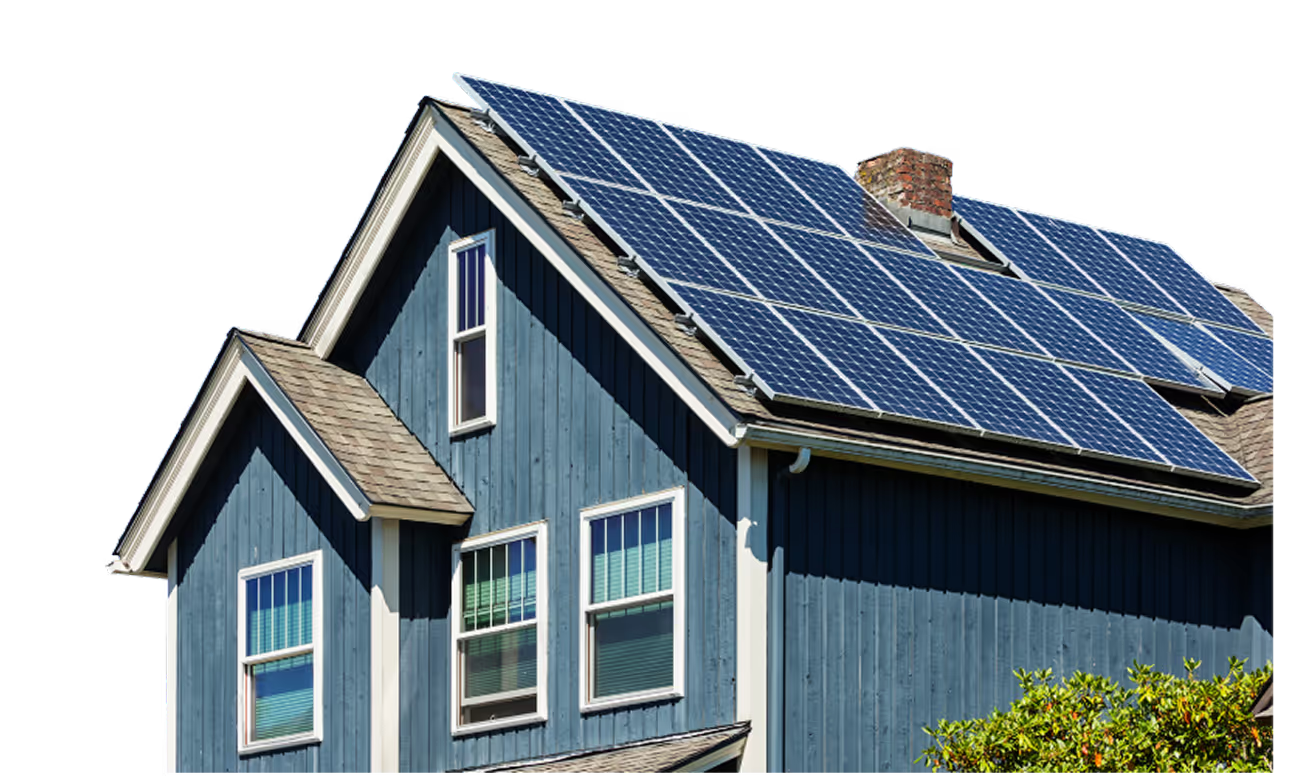
Solar panels don't care what type of compressor is drawing power, but they certainly care about how much power is drawn. An inverter air conditioner maintains a steady, lower daytime draw that is easier for a correctly sized solar system to cover than a non-inverter unit's repeated full-power spikes, which can push your household briefly above what the panels are generating.
Pairing an efficient aircon with solar panels also means requiring less total roof capacity to achieve the same cooling comfort, directly lowering your system’s Rent-to-Own monthly instalments. If you operate multiple cooling units alongside a hybrid solar and battery storage setup, the efficiency gap between inverter and non-inverter compounds fast across a full household.
When Does a Non-Inverter Still Make Sense?
Despite the energy savings, an inverted unit isn't always necessary. A standard non-inverter unit still wins in these 3 scenarios:
Rarely-used rooms: A guest room run a few times a month may never recoup a RM300 to RM500 premium.
Rental properties on a tight exit timeline: If you plan to move out within 1 to 2 years, lower upfront costs beat long-term bill savings.
Tight budgets: An affordable non-inverter installed today is far better than delaying your cooling needs.
FAQ
What's the difference between an inverter and non-inverter air conditioner?
An inverter air conditioner uses a variable-speed compressor that runs continuously at a lower, adjustable speed to hold your set temperature. A non-inverter air conditioner's compressor only runs at full power or switches off completely, cycling on and off as the room heats up.
Is an inverter aircon worth it for a room I barely use?
Usually not. If you're running it under 2 to 3 hours a day, the electricity savings are too small to recover a RM300 to RM500 price premium within a reasonable time.
How much electricity does a non-inverter aircon actually use?
A typical 1.5 HP non-inverter unit draws around 1,350W at full power and cycles on and off, using roughly RM113 a month running 8 hours a day at current TNB rates.
Are all new aircon units sold in Malaysia inverter models now?
No. Non-inverter units are still legally sold and widely available, though inverter has become the dominant choice for new unit purchases.
Can I upgrade my old non-inverter aircon to inverter without replacing the whole unit?
No. Inverter technology is built into the compressor itself, so it requires a full unit replacement.
Does an inverter aircon work better alongside solar panels?
Yes. Its steady, lower power draw is easier for a solar system to match throughout the day, reducing the grid electricity you still need to import.
What star rating should I look for when buying an inverter aircon in 2026?
Aim for 4 or 5 stars under Suruhanjaya Tenaga's revised MEPS scale, and check the CSPF number on the label rather than relying on the star count alone.
Which Aircon Actually Saves You Money?
For any room you run more than 4 hours a day, the price premium for an inverter unit pays for itself within 1 to 2 years, and continues saving your money for the entire lifespan of the unit. Over a decade, those savings add up to roughly a full year's worth of TNB bills back in your pocket. For rarely-used rooms or a short-term rental, a non-inverter unit is the more honest financial choice.
Want to see how much solar could save on your home's cooling bills? Try our FREE solar calculator or chat with the team on WhatsApp to learn more.

Rent-to-Own Solar. RM0 Upfront cost. Guaranteed Savings
Immediate ROI


Rent-to-Own Solar. RM0 Upfront cost. Guaranteed Savings
(10-Year RTO plan)
+ 10-Year Free Maintenance

Be part of The Solar Collective, where we share the latest updates, tips, and discussions on solar energy.

%20Price%20per%20Sq%20Ft.webp)
%20vs%20Assessment%20Tax%20(Cukai%20Pintu)%20Key%20Differences.webp)