Key Takeaways:
An aircond infrared (IR) controller (RM70–RM90) is the best smart home device for most Malaysian homes because it manages your highest electricity load, followed by energy-monitoring smart plugs and motion sensors. Google Home devices add voice control, but they are only sold through parallel importers, so there is no official local warranty.
Most smart home devices do nothing for your electricity bill. A Google Nest Hub handles music and weather, while an infrared (IR) aircond controller that switches off your aircond at 3 AM can save roughly 40 kilowatt-hours (kWh) a month in a single room, around RM20 at TNB's listed rate.
That gap matters because air conditioning drives 30% to 50% of a typical Malaysian home's electricity use, as our breakdown of what an aircond costs to run shows. The devices that control it earn their place. The rest are convenience, which is fine, as long as you know what you're paying for.
How We Ranked the 8 Best Smart Home Devices
We ranked eight devices on four criteria, in this order: how much they can cut your bill, price, whether they are sold locally, and how easy they are to install yourself. That is why an RM80 controller beats an RM600 smart display, and why the Google devices sit at the bottom. Below you'll find the ranking, where Google Home fits in Malaysia, and which smart switches suit older Malaysian wiring.
The 8 Best Smart Home Devices for Malaysian Homes in 2026
1. Aircond IR Controller: Broadlink RM4 Mini
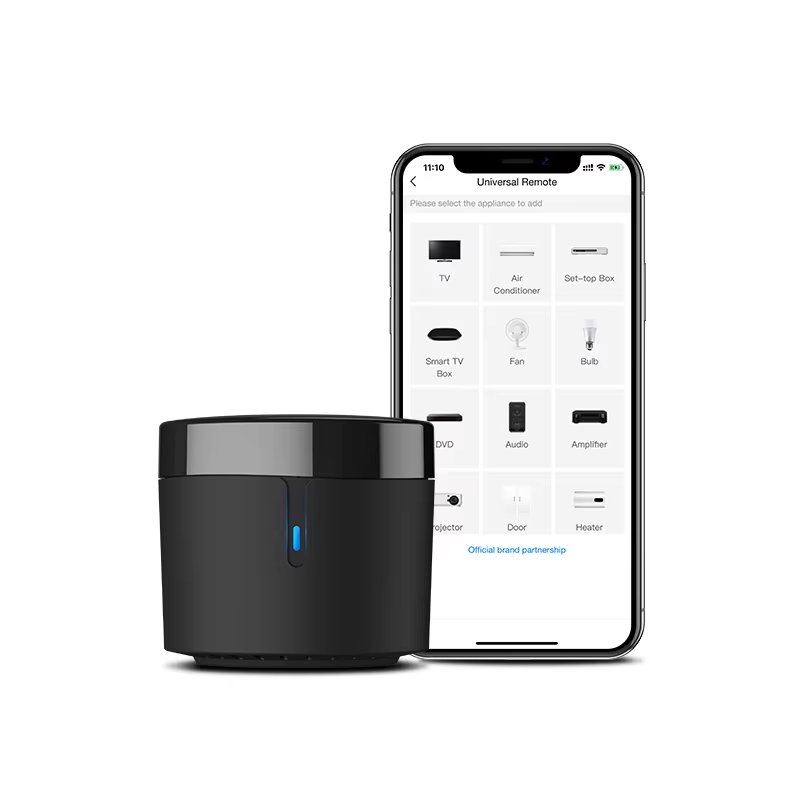
An aircond IR controller is the smart home device most likely to pay for itself. IR stands for infrared, the same signal your aircond's remote uses, so the controller turns your phone into a WiFi-powered remote. You can schedule the unit, switch it off or trigger it entirely from your phone.
The Broadlink RM4 Mini sells locally for around RM70–RM90, and resellers now bundle it with the HTS2 temperature and humidity sensor cable. That sensor lets you set rules that switch the aircond off when the room drops below a certain temperature.
A 1.5HP inverter aircond running eight hours a night uses about 161 kWh a month. Cut two needless hours and you save around 40 kWh in that room alone, roughly RM20 at TNB's listed rate for the 301 to 600 kWh band. Savings vary with your unit, room and habits. On an older non-inverter unit the saving is usually larger, which is why inverter vs non-inverter matters as much as the controller.
Best for: Bedrooms where the AC runs overnight.
Watch out for: It only connects to 2.4GHz Wi-Fi and needs a clear line of sight to the aircond. It also runs through its own app, so check that your sensors and voice assistant can control it before you build a wider setup.
2. Energy-Monitoring Smart Plug: TP-Link Tapo P110
.webp)
An energy-monitoring smart plug shows you exactly how much power each appliance uses. Plug in your fridge, water dispenser or TV and the app logs real-time watts and monthly kWh.
TP-Link's Tapo energy monitoring guide confirms the P110 tracks real-time power draw, keeps a usage history and estimates cost once you enter your rate. Smart plugs in Malaysia typically cost RM25–RM60, with energy-monitoring models at the higher end of the range.
Use it to spot idle loads, then set a schedule to cut them.
Best for: Finding hidden loads in your home.
Watch out for: Plug type and load. Buy the 3-pin Malaysian version, and never run an aircond or water heater through a smart plug.
3. Motion and Door Sensors: Aqara or Tuya
.webp)
Motion and door sensors upgrade your devices from manual app control to true automation. Without them, your devices still rely on you remembering to flip the switch.
Door and window sensors cost RM19–RM89 in Malaysia, and motion sensors RM29–RM79. Linked to your aircond controller through the same app or a shared platform such as Google Home, a motion sensor can power down the aircond when you leave, while a door sensor can pause cooling if someone leaves a sliding door open.
Aqara’s Zigbee sensors (Zigbee is a low-power wireless standard for smart home devices) offer years of battery life, but they need a dedicated hub. Budget Tuya Wi-Fi sensors save you the hub cost, but you pay for it with more frequent battery swaps and extra load on your router.
Best for: Living rooms and study rooms that get left with the AC running.
Watch out for: Mixing ecosystems. Sensors and controllers only trigger each other if they share an app or platform, so check compatibility before you buy. Some Tuya and Aqara hubs also include an IR blaster, which keeps everything in one app.
4. Smart Switches: Aqara D1 or Tuya
.webp)
Smart switches replace your wall switches, so your lights stay smart even when someone flicks them by hand. Smart bulbs lose that ability the moment a guest cuts power at the wall.
Budget Tuya smart switches start around RM45. The Aqara D1 sells for RM139–RM209 depending on gang count, and the premium Aqara H1 range runs RM179–RM299.
Smart switches lost points on DIY ease because they need hardwiring. Anything wired into your switch box should go through a licensed electrician (LEW), and switches sold legally in Malaysia carry the SIRIM label under Energy Commission (Suruhanjaya Tenaga) rules. Check for the label before you buy from a marketplace.
Best for: Renovations and new builds where you're replacing switches anyway.
Watch out for: Older homes without a neutral wire. The section on smart switches in older homes below covers your options.
5. Indoor Security Camera: TP-Link Tapo or Xiaomi
.webp)
Popular for checking on kids, pets or elderly parents from the office, indoor cameras trade energy savings for everyday peace of mind.
Local favourites Tapo and Xiaomi offer plenty of indoor camera choices at around RM79–RM159.
Check two things before you buy: Local microSD storage versus mandatory cloud subscriptions, and server location, since some brands transmit footage via servers hosted outside Malaysia.
Best for: Families who want to check on the home while they’re out.
Watch out for: Cloud subscription fees that add up over the life of the camera.
6. Smart Door Lock
.webp)
No device on this list offers more daily convenience than a smart door lock. It won't lower your power bill, but unlocking via fingerprint, PIN, or app removes physical keys entirely.
Smart locks range from RM299 for basic digital deadbolts to over RM2,000 for advanced 3D face-recognition models. They rank lower on value and DIY-friendliness because a poorly installed lock is a security risk, so professional installation is worth paying for.
Choose a lock with a physical key override and low-battery warnings. For semi-outdoor doors or gates exposed to rain and humidity, verify local warranty terms and look for an IP65 rating or higher. IP65 means the lock is dust-tight and protected against water jets.
Best for: Homes with helpers, contractors or tenants coming and going.
Watch out for: Locks that only open through a cloud app.
7. Google Mini: Google Nest Mini 2nd Gen
.webp)
The Google Nest Mini, which most people still call the Google Mini, is the cheapest way to add voice control to a Google Home setup. A command like "Hey Google, turn off the aircond" relays instantly to your linked IR controllers, switches or smart plugs.
Google discontinued the Nest Mini in June 2026 when it launched its Gemini-powered Google Home Speaker, though it still supports existing units with updates. Malaysian stock is all parallel import at RM130–RM299, without a Google-backed warranty.
Best for: Households already on Android and Google services.
Watch out for: UK or EU plugs on imported units, and sellers asking more than RM200 for ageing hardware.
8. Google Nest Hub 2nd Gen: The "Google Hub"
.webp)
The Google Nest Hub is a 7-inch smart display that puts all your smart home devices on one touchscreen. When Malaysians search for a "Google hub," this is usually the device they mean.
It costs RM390–RM650 locally, again through parallel importers only. Some features, such as sleep tracking and gesture controls, may not work in Malaysia, so ask the seller before you buy.
The dashboard is the main selling point. Family members get one-tap control over airconds and porch cameras without installing multiple apps. It also doubles as a digital photo frame for your kitchen.
Best for: Families who want one shared control panel.
Watch out for: Paying RM600 or more for a 2021 device with no local warranty.
Is Google Home Available in Malaysia?
Not officially. Google doesn't sell its Google Home or Nest speakers and displays through a Malaysian store. Its new Google Home Speaker launched in June 2026 at US$99 across 18 regions, which do not include Malaysia.
The Google Home app works fine here and controls thousands of third-party smart home devices. What you give up with imported hardware is local warranty and, sometimes, regional features.
Sources: TechCrunch (October 2025), Stuff (June 2026), TechTRP (March 2026), Priceshop and Malaysian resellers (October 2026)
For Android homes, a reputable Nest Mini reseller offering a 1-year shop warranty is the practical route. If you want manufacturer warranty, the HomePod mini is the official pick for iPhone users.
Which Smart Switches Work in Older Malaysian Homes?
Most older landed homes in Malaysia lack a neutral wire at the switch wall box, and that decides which smart switches you can install:
- Neutral wire present: Any smart switch works, including Wi-Fi models. This is the most stable setup.
- No neutral wire: Choose a no-neutral model, such as the no-neutral versions of the Aqara D1 or H1. Expect occasional flicker with low-wattage LED bulbs.
- No rewiring allowed: Use smart bulbs, or a wireless switch that sticks to the wall and triggers a scene.
Have an LEW check one switch box before buying. A quick 10-minute inspection saves you from returning a whole box of smart switches.
Do Smart Home Devices Actually Lower Your Electricity Bill?
Only the ones that control a big load. The devices themselves draw very little power. Their savings depend entirely on what they switch off:
If saving electricity is your goal, spend on the top two rows first. Check your actual usage with our TNB bill calculator before you buy anything.
Timing matters as much as the device. A TNB smart meter records when you use power, and if you have solar, every kWh you use while the panels produce is worth more than one you export under Solar ATAP. Run the washing machine and EV charger in the daytime using their built-in timers. For the water heater, ask your LEW about a properly rated switch or timer rather than a standard smart plug.
For a deeper look at full system costs, see our guide to what a smart home costs in Malaysia.
Frequently Asked Questions
What smart home devices should I buy first?
Start with an aircond IR controller and an energy-monitoring smart plug. Together they cost under RM150 and show you where your electricity goes before you spend on anything else.
Can I use Google Home in Malaysia?
Yes. The Google Home app works in Malaysia and controls thousands of compatible smart home devices. Google just doesn't sell its own Nest speakers and displays here, so you buy them through parallel importers without Google warranty.
Is the Google Mini still worth buying in 2026?
At RM130–RM180 from a reputable reseller, yes, if your home runs on Android and Google services. Google discontinued it in June 2026 but still supports it with updates. Above RM200, the missing warranty makes it harder to justify.
What's the difference between Google Home and the Google Nest Hub?
Google Home is the app and platform that runs your smart home. The Nest Hub is Google's 7-inch smart display that runs on that platform. Google's older speakers also carried the "Google Home" name, which causes the confusion.
Do smart switches need a neutral wire?
Most Wi-Fi smart switches do. Many Zigbee models, such as Aqara's no-neutral versions, don't. Ask an LEW to check your switch box before you buy.
Do smart home devices use a lot of electricity?
No. Even 20 smart devices running all month add less to your bill than one aircond left on for an extra hour every night.
Smart Devices Control the Bill, Solar Shrinks It
For under RM150, an aircond controller paired with an energy-monitoring plug gives you far more useful insight into your bill than any RM600 smart display. Prioritise these high-impact upgrades first, add sensors and smart switches next, and treat voice controllers as optional extras.
Once your heavy appliances run on a schedule, rooftop solar can cover that usage with power you generate yourself. Rent-to-Own solar starts at RM0 upfront, so you can move to solar without a large first payment. Savings vary with your roof, usage and system size.
Check out our solar calculator or chat with the team on WhatsApp whenever you're ready. There's no obligation either way.

Rent-to-Own Solar. RM0 Upfront cost. Guaranteed Savings
Immediate ROI



Rent-to-Own Solar. RM0 Upfront cost. Guaranteed Savings
(10-Year RTO plan)
+ 10-Year Free Maintenance

Be part of The Solar Collective, where we share the latest updates, tips, and discussions on solar energy.

%20Price%20per%20Sq%20Ft.webp)
%20vs%20Assessment%20Tax%20(Cukai%20Pintu)%20Key%20Differences.webp)