Key Takeaways:
A clogged condensate drain pipe is usually the cause of most aircon leaks in Malaysian homes, and you can often fix it yourself in under 15 minutes. Ignoring a leak can cost you a compressor replacement.
Aircon leaking water and pooling on the floor isn't something to wipe up and forget. In Malaysia's climate, it's almost always one of a handful of fixable problems, and most cost far less to fix than to ignore.
If you've mopped up the water once and it's back the next day, the unit is telling you something specific. This guide covers the 6 most common causes of aircon leaks in Malaysia, what you can check yourself, when to call a technician, and why a leaking unit quietly pushes your TNB bill higher the longer it runs unfixed.
Why Is Your Aircon Leaking Water?
Your aircon pulls moisture out of humid air non-stop, and that water needs somewhere to go. When the path out gets blocked, or the unit isn't cooling properly, the water comes back into your room instead.
1. Clogged Condensate Drain Pipe
This causes the majority of leaks in Malaysia. Dust, algae, and a thick sludge locals call "aircon jelly" build up inside the drain pipe over months. Once it blocks completely, water backs up into the indoor unit and drips from the front panel.
Fix: flush the pipe with a wet vacuum, or book a chemical wash if the unit hasn't had one in over a year.
2. Dirty Air Filter or Frozen Coil
A clogged filter restricts airflow across the evaporator coil. The coil gets too cold, ice forms on it, and the leak shows up once that ice melts and overflows the drain tray.
Fix: turn the unit off, let the ice melt completely, then wash the filter and run fan mode for 30 minutes before switching back to cooling.
3. Low Refrigerant Gas
A refrigerant leak drops the coil's temperature further than it should, which freezes the coil the same way a dirty filter does. Topping up gas without finding the leak means paying for the same gas again in a few months.
Fix: this needs a technician with an electronic leak detector. Don't attempt it yourself.
4. Wrong Installation Angle
Split units need a slight tilt toward the drain side, around 1 to 2 degrees, so condensate flows out instead of back into the room. Samsung's own installation guidance confirms this is one of the most overlooked causes of leaks right after a new unit goes in.
Fix: a technician re-levels the indoor unit. This isn't a DIY job if it involves re-mounting the bracket.
5. Cracked or Rusted Drain Pan
Units over 8 years old sometimes develop a rusted-through drain pan. A patch buys a few months, but replacement is the real fix.
Fix: ask your technician whether patching is worth it or whether it's time to plan for a new unit.
6. Normal Condensation
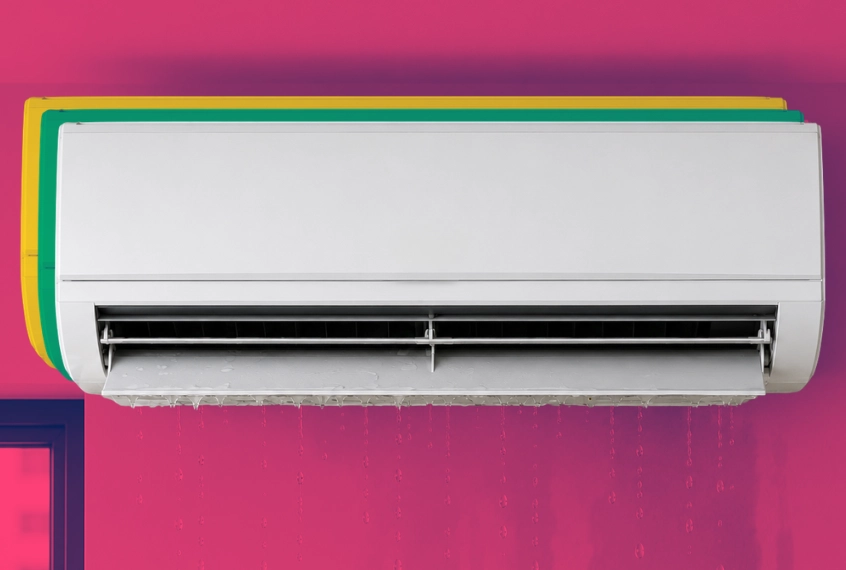
Sometimes it isn't a leak at all, just water droplets on the front blades from cooling set too low, high outdoor humidity, or fan speed set too slow. Samsung recommends setting the temperature to 26°C and running dry mode for 3 to 4 hours before switching back to cooling.
Fix: adjust temperature and fan speed before assuming the worst.
Match the sign in your home to the row above before you call anyone. It tells you whether you're looking at a 15-minute fix or a service appointment.
Stop the Leak Right Now
- Switch off the unit and the circuit breaker: water and electricity together are a hazard, and this halts the leak while you check the cause.
- Move electronics, rugs, and furniture: clear the drip zone before you do anything else.
- Catch the water: a bucket or towel protects your flooring while you diagnose the problem.
- Check and clean the filter: it's the one step every homeowner can do safely without tools.
- Still dripping after that: book a technician, and don't run the unit again until the cause is confirmed.
DIY Fix or Call a Technician?
Figures reflect typical market ranges across Malaysian aircon service providers and vary by brand, unit condition, and location.
A Leaking Aircon Quietly Inflates Your TNB Bill
A blocked drain or a dirty coil forces the compressor to work harder to hit the same cooling temperature, which pulls more power for the same result. That shows up on your TNB bill as higher usage even if you haven't changed how you use the unit, and it compounds every month the AFA adjustment is active on top of your base rate.
If your aircon is older and non-inverter, the gap is even wider. Our breakdown of inverter versus non-inverter aircon running costs shows how much a poorly maintained non-inverter unit can add to a household's monthly bill compared to a clean, well-serviced inverter system.
Malaysia's Suruhanjaya Tenaga has also tightened the star rating standard for air conditioners sold from 1 January 2026, which means a unit bought before this year may already be less efficient than what's on shelves today, on top of any efficiency it's losing to a blocked drain or dirty coil.
How To Prevent Aircon Leaks From Happening Again
Book a chemical wash every 6 to 12 months, more often if you live near heavy traffic or construction dust. Clean the filter yourself monthly during peak usage. And if your unit has never had a proper service since installation, that's the first thing to check, not the last.
Watching your TNB Smart Meter data after a service is also a fast way to confirm the fix worked. Usage should drop back to your normal baseline within a billing cycle if the leak was tied to an efficiency problem rather than just a blocked pipe.
One more thing: if water has reached a power point or the ceiling wiring, don't just wipe it and move on. Get a Licensed Electrical Worker (LEW) to check the wiring before the unit goes back on.
Frequently Asked Questions
How do I stop my aircon from leaking water?
Turn off the unit, clear the drain pipe with a wet vacuum, and clean the air filter. If the drip continues after that, the cause is likely refrigerant, installation, or a damaged part, and it needs a technician.
Can I still use my AC if it's leaking water?
Switch it off first. Running a leaking unit lets water spread further into your ceiling or walls, and if refrigerant or an electrical fault is behind it, continued use can make the repair more expensive.
Should I turn off my AC if it is leaking?
Yes, straight away. Switch off the unit and the circuit breaker before you inspect anything, especially if water has reached a power point or wiring nearby.
Should I be worried if my AC is leaking water?
Not immediately, but don't ignore it either. Most leaks trace back to a blocked drain or a dirty filter, both cheap fixes. Left unchecked for weeks, the same leak stains ceilings, warps flooring, and encourages mould in Malaysia's humidity.
How much does a chemical wash cost in Malaysia?
Most providers charge RM80 to RM150 per unit, depending on the brand and how long it's been since the last service.
Why does my new aircon leak right after installation?
It's almost always the installation angle. The indoor unit needs a slight tilt toward the drain side, and an installer who skips this step causes an immediate leak.
The Leak Isn't the Real Problem, Ignoring It Is
Your aircon dripping water doesn’t always mean your unit is faulty. It's usually a blocked pipe, a dirty filter, or a coil that needs attention, and those are cheap to fix. It’s advisable to catch a leak early you’re hit with a potential compressor bill that could cost 10 times more.
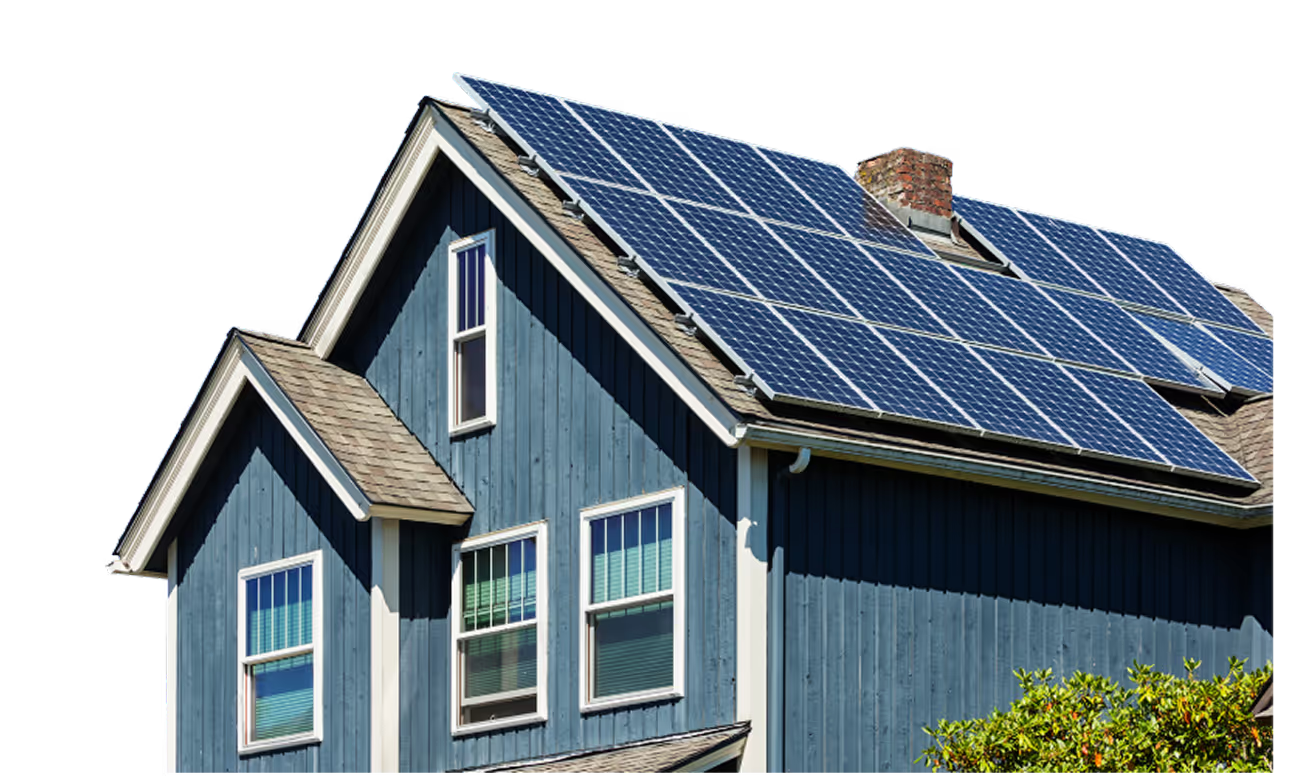
If solar is also on your radar as a way to offset a home that runs its aircon hard, see our full guide to solar panel installation costs in Malaysia for a deeper look at what it takes to bring your TNB bill down for good.
Visit our FREE solar calculator or chat with the team on WhatsApp whenever you're ready.

Rent-to-Own Solar. RM0 Upfront cost. Guaranteed Savings
Immediate ROI


Rent-to-Own Solar. RM0 Upfront cost. Guaranteed Savings
(10-Year RTO plan)
+ 10-Year Free Maintenance

Be part of The Solar Collective, where we share the latest updates, tips, and discussions on solar energy.


%20Price%20per%20Sq%20Ft.webp)
%20vs%20Assessment%20Tax%20(Cukai%20Pintu)%20Key%20Differences.webp)