
Key Takeaways:
Stainless steel water tanks cost 3–5x more than poly or FRP but lasts longer than both, with no leaching into stored water. Poly and FRP tanks take the win on upfront cost and weight but stainless wins overall if you want to install once and forget about it.
A stainless steel water tank costs 3-5x more than an equivalent poly or FRP one. The real question isn't which is cheaper, it's whether that extra cost buys you enough extra lifespan to be worth it.
This guide breaks down what actually separates the three material — cost, lifespan, hygiene, and where each makes sense — so you're not choosing based on price tag alone.
What's the Real Difference Between Stainless Steel and Poly/FRP Water Tanks?
Stainless steel tanks are fabricated from steel sheets welded or bolted into panels, most commonly in grade 304 or 316. Poly water tanks (short for polyethylene) are rotomoulded from a single piece of plastic. Every polyethylene water tank sold in Malaysia must be SIRIM-certified to Malaysian Standard MS 1225 before it can carry SPAN (Suruhanjaya Perkhidmatan Air Negara, Malaysia's national water services regulator) approval.
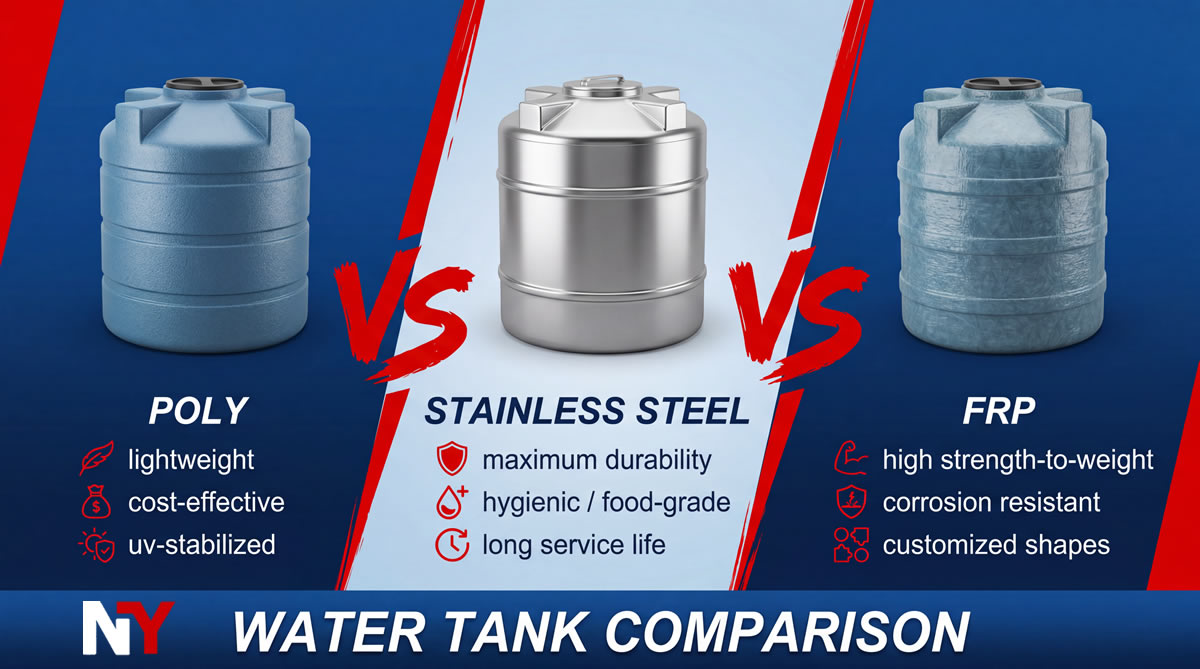
A FRP panel water tank (also called a GRP panel water tank, certified separately under MS 1390:2010) uses fibreglass panels bolted together on-site rather than moulded as one piece, which is why a small-capacity FRP panel water tanks are uncommon in Malaysia.
The difference is in how each one ages. Stainless steel resists corrosion through a self-healing chromium oxide layer, while poly and FRP simply don't rust, but both degrade under prolonged UV exposure.
Mini-takeaway: Stainless steel is a metal that resists corrosion; poly and FRP are plastics that don’t corrode but weather differently over time.
Is Stainless Steel Good for Water Tanks?
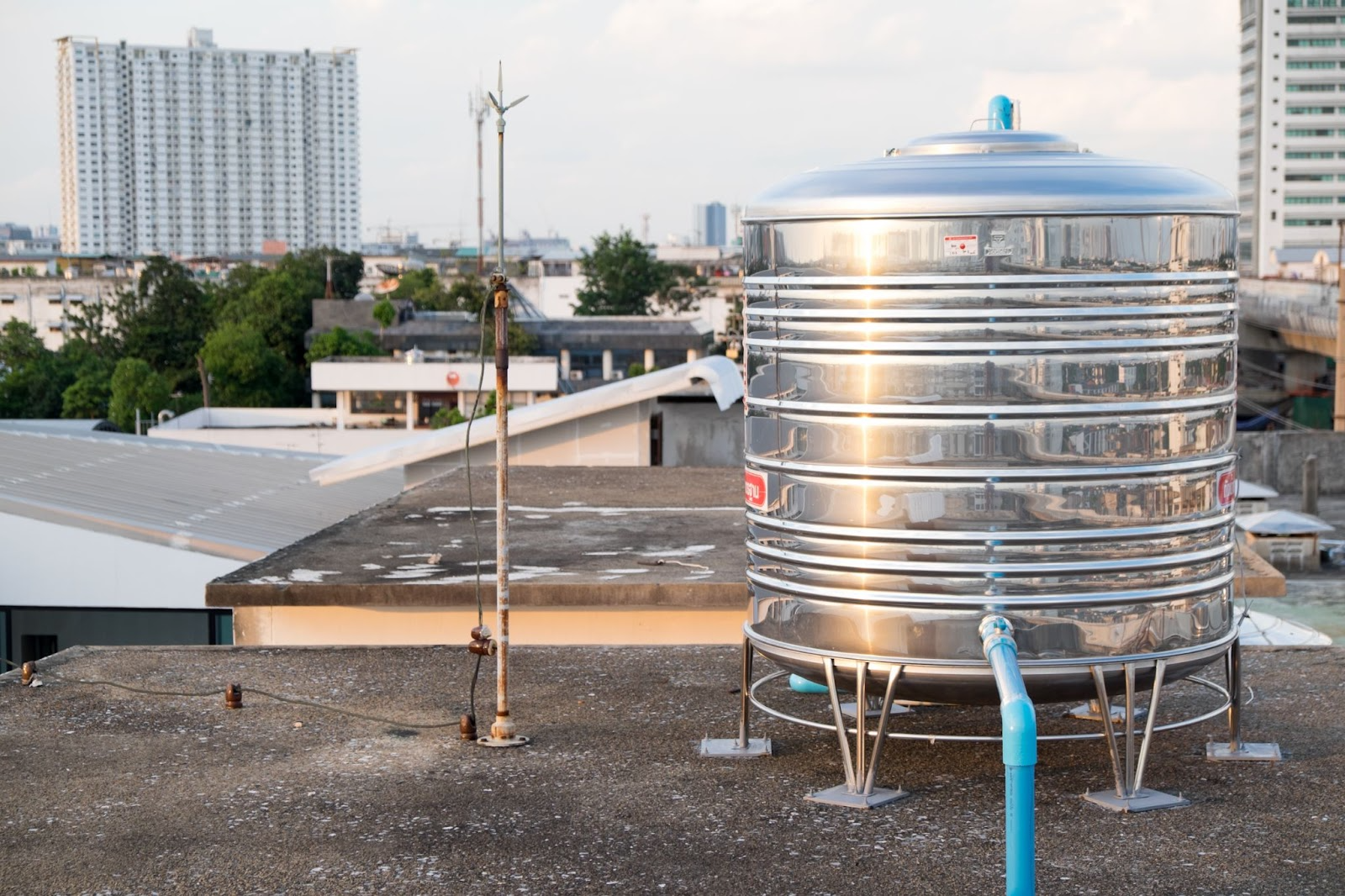
Yes, stainless steel is widely regarded as the premium choice for potable water storage. Under Malaysia's Water Services Industry Act 2006, water tanks used for potable water storage require SPAN approval to ensure they don't contaminate stored water. Stainless steel tanks meet this requirement well due to their non-reactive surface.
Most residential stainless steel tanks in Malaysia use grade 304, which handles standard freshwater storage well. Grade 316 adds molybdenum to the alloy, which improves resistance to chloride corrosion.
Mini takeaway: 304 handles most homes fine; 316 is the upgrade if you're near the coast or dealing with chloride-rich water.
What Are the Downsides of Stainless Steel Water Tanks?
- Cost: A stainless steel tank costs 3–5x the price of an equivalent poly or FRP tank
- Weight: Stainless steel tanks weigh considerably more than poly for the same capacity, which matters if you're placing one on a roof with limited load capacity. If you're also planning a solar panel installation, it's worth checking your roof's total load capacity before committing to either.
- Dents: Stainless steel can dent on impact, which poly tanks handle better by simply flexing.
- Installation complexity: Panel-assembled stainless tanks generally need more skilled labour to install correctly than a single-piece poly tank.
Mini takeaway: Stainless steel trades upfront cost and weight for corrosion-free longevity. Worth it if you're staying in the home long-term.
How Do Poly and FRP Water Tanks Compare on Durability?
Poly tanks are the default in Malaysia for good reason: they’re cheap, lightweight, and simple to install. But UV exposure gradually degrades the plastic, causing brittleness and discolouration over time. Most poly tanks will need replacing within 10–15 years.
FRP panel water tanks sit in between. The fibreglass-and-resin construction is more UV-resistant and structurally rigid than standard poly, which is why FRP panel water tanks are often the choice for larger-capacity ground-mounted installations rather than small household units. Structural certification for this category in Malaysia falls under MS 1390:2010 for GRP sectional water tanks, the SIRIM standard covering panel construction and design.
Mini-takeaway: FRP splits the difference — sturdier and longer-lasting than standard poly, but it only makes economic sense once you're above the capacity where a single-piece poly tank stops being practical.
Cost Comparison: Stainless Steel vs Poly vs FRP
Pricing is easiest to compare in litres, since that's how installer quotes are usually scoped, even though retail poly tanks are commonly sold by gallon (1 gallon is around 4.55 litres).
Source: ClickBina Water Tank Cost Guide Malaysia 2026, Klang Valley estimates updated May 2026. These figures are indicative; get a direct quote from your installer to confirm current pricing for your capacity and site conditions.
Lifespan Comparison: What You're Actually Paying For
Source: ClickBina Water Tank Cost Guide Malaysia 2026; actual lifespan depends on installation quality, water chemistry, and UV exposure.
Which Should You Choose?
- Choose poly if you're budget-constrained, renting, or replacing a tank you expect to need again within a decade anyway.
- Choose FRP if you need a larger-capacity, ground-mounted tank and want better UV resistance than standard poly without paying stainless steel prices.
- Choose stainless steel (304) if you're staying long-term and want to stop thinking about water tank replacement.
- Choose stainless steel (316) if you're in a coastal area or dealing with more chloride-rich water.
If you're still deciding on capacity and placement before picking a material, our full guide to water tank types and sizing in Malaysia covers that part first.
Frequently Asked Questions
Is stainless steel good for water tanks?
Yes. It resists corrosion, doesn't leach into stored water, and meets Malaysia's SPAN approval requirements for potable water storage.
What are the downsides of stainless steel water tanks?
Higher cost, more weight on your roof, and vulnerability to denting.
How much does a 20 litre stainless steel water tank cost?
Small-capacity stainless steel tanks at this size are uncommon with most household stainless tanks starting from 500 gallons upward. For anything closer to 20 litres, you're likely looking at a specialty or industrial supplier rather than a standard residential tank retailer.
Does polyethylene or FRP last longer?
FRP typically outlasts standard polyethylene by 5–10 years due to better UV resistance, though both fall short of stainless steel's lifespan.
Stainless Steel or Poly/FRP: It Comes Down to Time, Not Just Money
There's no universally "best" material here, only the one that matches how long you plan to own the home and how much upfront cost you're willing to absorb for fewer replacements down the line. Poly and FRP get the job done at a lower barrier to entry, but stainless steel is the buy-it-once option for homeowners who'd rather not think about their water tank again for two decades.
If you're already weighing bigger home upgrades alongside your water tank decision, such as a solar installation with its own roof load and long-term cost consideration, our homeowners page covers what else Malaysian landed homeowners are typically weighing. You can also run the numbers on your own roof with our solar calculator, or chat with the team on WhatsApp.

Rent-to-Own Solar. RM0 Upfront cost. Guaranteed Savings
Immediate ROI



Rent-to-Own Solar. RM0 Upfront cost. Guaranteed Savings
(10-Year RTO plan)
+ 10-Year Free Maintenance

Be part of The Solar Collective, where we share the latest updates, tips, and discussions on solar energy.

.png)

%20Price%20per%20Sq%20Ft.webp)