Key Takeaways:
For most Malaysian homes, a 1kWh LFP portable power station priced between RM3,800 and RM5,300 is the sweet spot: enough to keep a fridge, Wi-Fi, fans and lights running through a typical outage. The EcoFlow DELTA 3 Plus is our best overall pick for its local warranty and expandability, while the DJI Power 1000 V2 offers the most output per ringgit.
If you experience frequent power outages, a portable power station keeps those essentials running without the noise, fumes or petrol runs of a traditional generator.
Malaysian prices for a portable power station range from around RM2,100 to over RM17,000, with diverse specs, and many marketplace listings are parallel imports with no local warranty.
This guide ranks our 8 portable power stations sold in Malaysia using a weighted methodology, with ringgit prices, real runtimes for common appliances, and a checklist to run before you pay. GetSolar doesn't sell portable power stations, so we have no stake in which brand you pick.
Best Portable Power Station in Malaysia: The Quick Verdict
The best portable power station in Malaysia for most homes is the EcoFlow DELTA 3 Plus: 1,024Wh, 1,800W output, expandable to 5kWh and serviced locally. If output per ringgit matters more than local after-sales, the DJI Power 1000 V2 delivers 2,600W from the same capacity for RM1,300 less.
Sources: Official EcoFlow Malaysia list prices, DJI Store Malaysia, AI Home (Anker and Jackery, reseller). Prices checked November 2026, before promo codes.
RM per Wh tells you how much storage each ringgit buys. Lower is better value, but it says nothing about warranty or output, which is why we weight those separately below.
How We Ranked These Portable Power Stations
We assessed each unit against 7 criteria, weighted by how much they matter to a Malaysian homeowner. Local warranty carries the most weight because a power station you can't get repaired in Malaysia is a very expensive paperweight.
All specs come from manufacturer or official Malaysian distributor pages. Where we could only find a reseller price, we say so in the entry.
The 8 Best Portable Power Stations in Malaysia
1. EcoFlow DELTA 3 Plus: Best Overall
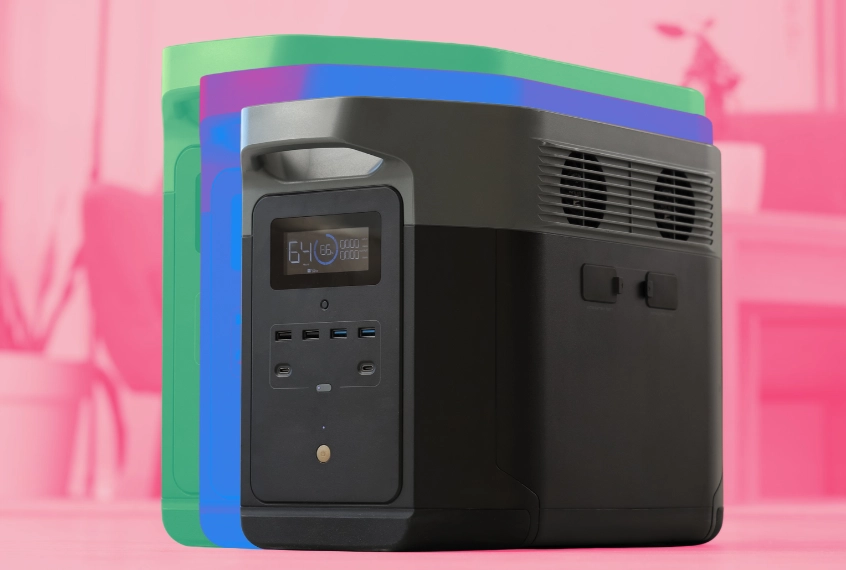
The EcoFlow DELTA 3 Plus is the most complete 1kWh portable power station you can buy in Malaysia, backed by a local warranty and expandable to 5kWh. It stores 1,024Wh and delivers 1,800W, enough for a fridge, fans, lights and a router at the same time.
Its biggest advantage is after-sales. Official EcoFlow Malaysia lists 2 years on the unit and 5 years on the LFP battery, with servicing in Iskandar Puteri, Johor. EcoFlow rates a full recharge at 56 minutes on AC input, and you can add extra batteries later instead of buying a second unit.
- Price: RM5,299 (list)
- Capacity and output: 1,024Wh, 1,800W, expandable to 5kWh
- Weight: 12.5kg
- Watch out for: you pay around RM1,500 more than the DELTA 3 Classic for expandability and faster charging
2. EcoFlow DELTA 3 Classic: Best Value 1kWh
The EcoFlow DELTA 3 Classic gives you the same 1,024Wh and 1,800W as the DELTA 3 Plus for RM1,500 less. At RM3.71 per Wh, it is the cheapest 1kWh unit on this list with full local warranty support.
The trade-off is flexibility. The Classic doesn't share the Plus's expansion headline, so treat it as a fixed-capacity unit. For a household that wants a fridge, router and fans covered through a few hours of downtime, that rarely matters.
It carries the same local warranty structure through EcoFlow's Malaysian distributor, which also lists its units as certified by SIRIM QAS and the Energy Commission (Suruhanjaya Tenaga).
- Price: RM3,799 (list)
- Capacity and output: 1,024Wh, 1,800W
- Best for: first-time buyers covering essentials during short outages
- Watch out for: fixed capacity, so size it right the first time
3. DJI Power 1000 V2: Highest Output for the Price
The DJI Power 1000 V2 delivers 2,600W of continuous output from a 1,024Wh battery, the highest output of any 1kWh unit here. That extra headroom lets it start appliances with high surge draws, such as a microwave or kettle, that would trip an 1,800W unit.
DJI rates it at 37 minutes to 80% from the wall, and it accepts up to 5 expansion batteries for a maximum of 11,264Wh. The DJI Store Malaysia lists it at RM3,999, and authorised dealers such as DJI Sunway Pyramid carry it in-store.
- Price: RM3,999
- Capacity and output: 1,024Wh, 2,600W
- Weight: 14.2kg
- Watch out for: confirm the Malaysian warranty period with your seller before you buy, since DJI's terms vary by region and retailer.
4. Jackery Explorer 1000 v2: Lightest 1kWh Option
The Jackery Explorer 1000 v2 packs 1,070Wh into a 10.8kg body, making it the easiest 1kWh unit on this list to carry. It delivers 1,500W and, with emergency charging switched on in the Jackery app, recharges in around 1 hour.
Jackery rates its LFP cells for 4,000 cycles while keeping over 70% capacity. Jackery entered Malaysian retail in 2023 through electronics and outdoor stores, so you'll mostly find it at resellers rather than a brand store. We found it listed at RM3,999.
- Price: RM3,999 (reseller)
- Capacity and output: 1,070Wh, 1,500W
- Best for: buyers who move the unit between home, car and campsite
- Watch out for: 1,500W is the lowest output among the 1kWh picks, and solar charging works only with Jackery panels
5. Anker SOLIX C1000: Best for Deal Hunters
The Anker SOLIX C1000 offers 1,056Wh and 1,800W at the lowest price per Wh on this list, when you catch it on sale. We found it at RM2,499 against a RM4,399 list price at Malaysian reseller AI Home, which works out to RM2.37 per Wh.
The specs hold up: LFP cells rated for 3,000 cycles, a 2,400W surge rating and support for an expansion battery. The weak point is local support. Anker's own Malaysian store lists older PowerHouse models rather than the C1000, and the reseller listing we found shows a 1-year warranty.
- Price: RM2,499 (reseller sale) to RM4,399 (list)
- Capacity and output: 1,056Wh, 1,800W
- Best for: budget buyers comfortable with a shorter warranty
- Watch out for: check who honours the warranty before you pay
6. EcoFlow RIVER 3 Plus: Best for Camping and Travel
The EcoFlow RIVER 3 Plus is a compact 286Wh unit built for campsites, car boots and charging devices on the move. It delivers 600W, enough for a portable fan, lights, phones, a laptop and a small 12V cooler.
Its capacity expands to 858Wh with an add-on battery, so you can start small and grow it. At RM7.34 per Wh it is the most expensive storage on this list, which is normal for small units: you pay for portability, not capacity.
- Price: RM2,099 (list)
- Capacity and output: 286Wh, 600W, expandable to 858Wh
- Best for: weekend trips to Cameron Highlands or Janda Baik
- Watch out for: it won't run a fridge for long or anything above 600W
7. EcoFlow DELTA 3 Max Plus: Best for Long Outages
The EcoFlow DELTA 3 Max Plus doubles capacity to 2,048Wh and delivers 3,000W, enough to keep a fridge running through an overnight outage with power to spare. It matches the DJI Power 1000 V2 on value at RM3.91 per Wh while offering twice the storage.
At 22.1kg it is still a one-person lift, and it expands to 4,096Wh with its matching extra battery. It suits homes in flood-prone areas, or anyone who works from home and can't afford a full day offline.
- Price: RM7,999 (list)
- Capacity and output: 2,048Wh, 3,000W
- Weight: 22.1kg
- Watch out for: if your outages rarely last more than 2 hours, a 1kWh unit covers you for less
8. EcoFlow DELTA Pro 3: Best for Whole-Home Backup
The EcoFlow DELTA Pro 3 is a 4,096Wh, 4,000W system that sits between a portable power station and a home battery. It expands up to 48kWh, which is enough to back up large parts of a landed home for a day or more.
At RM17,199 it costs RM4.20 per Wh, and at 51.5kg it rolls on wheels rather than being carried. Treat it as a home installation: if you are spending this much, compare it against a home solar battery that pairs with rooftop panels.
- Price: RM17,199 (list)
- Capacity and output: 4,096Wh, 4,000W, expandable to 48kWh
- Weight: 51.5kg
- Watch out for: at this price, a fixed home battery may serve you better
Also Worth a Look: BLUETTI
BLUETTI's Elite and AC ranges score well internationally on cycle life and value. We left it off the ranked list because we couldn't verify an official Malaysian distributor or consistent ringgit pricing. If you buy one, confirm the warranty is claimable in Malaysia and that the unit is a 240V, Type G model.
How Long Will a Portable Power Station Run Your Appliances?
A 1kWh portable power station runs a Wi-Fi router for around 3 days but an aircond for barely an hour. Runtime depends on how many watts each appliance draws, and you lose some energy converting battery power to AC.
Here's how a 1,024Wh unit like the DELTA 3 Plus or DJI Power 1000 V2 handles common loads, assuming around 870Wh is usable after conversion losses:
Runtimes are GetSolar estimates assuming 85% usable capacity. Your appliance's actual draw will vary.
The pattern is clear: small, steady loads run for hours, while cooling and heating appliances drain a unit fast. To size your own, add up watts multiplied by hours for everything you want to run, then divide by 0.85.
Portable Power Station vs Portable Electricity Generator: Which Should You Buy?
A portable power station is the safer, quieter choice for home backup, while a petrol portable electricity generator wins only when you need high output for many hours. The two solve different problems.
For apartments, terraced homes with tight setbacks or anyone sleeping through an outage, a power station is the practical choice. Generators still make sense for long rural outages or running power tools all day.
What Should You Check Before Buying a Portable Power Station?
Run through this list before you pay:
- Authorised Malaysian seller: EcoFlow's Malaysian distributor warns that many marketplace units are parallel imports with no local warranty and after-sales charges about 3 times higher
- 240V, 50Hz, Type G sockets: so you can plug in household appliances without adaptors
- LFP (LiFePO4) battery: longer cycle life and better heat tolerance than older lithium-ion cells
- Continuous vs surge watts: match continuous output to your biggest appliance, and check its start-up surge
- Certification: look for SIRIM QAS and Energy Commission marks on the unit or listing
- UPS or switchover time: if you want it to protect a desktop or router without a reboot
- Solar input: check maximum solar watts and which panels are compatible
If your home suffers frequent power fluctuations rather than full outages, pair any unit with proper surge protection at the board.
Can a Portable Power Station Replace Rooftop Solar?
No. A portable power station stores energy; it doesn't generate any, so charging it from the wall and using it later won't lower your TNB bill. You lose around 15% of that energy in conversion, so it costs slightly more.
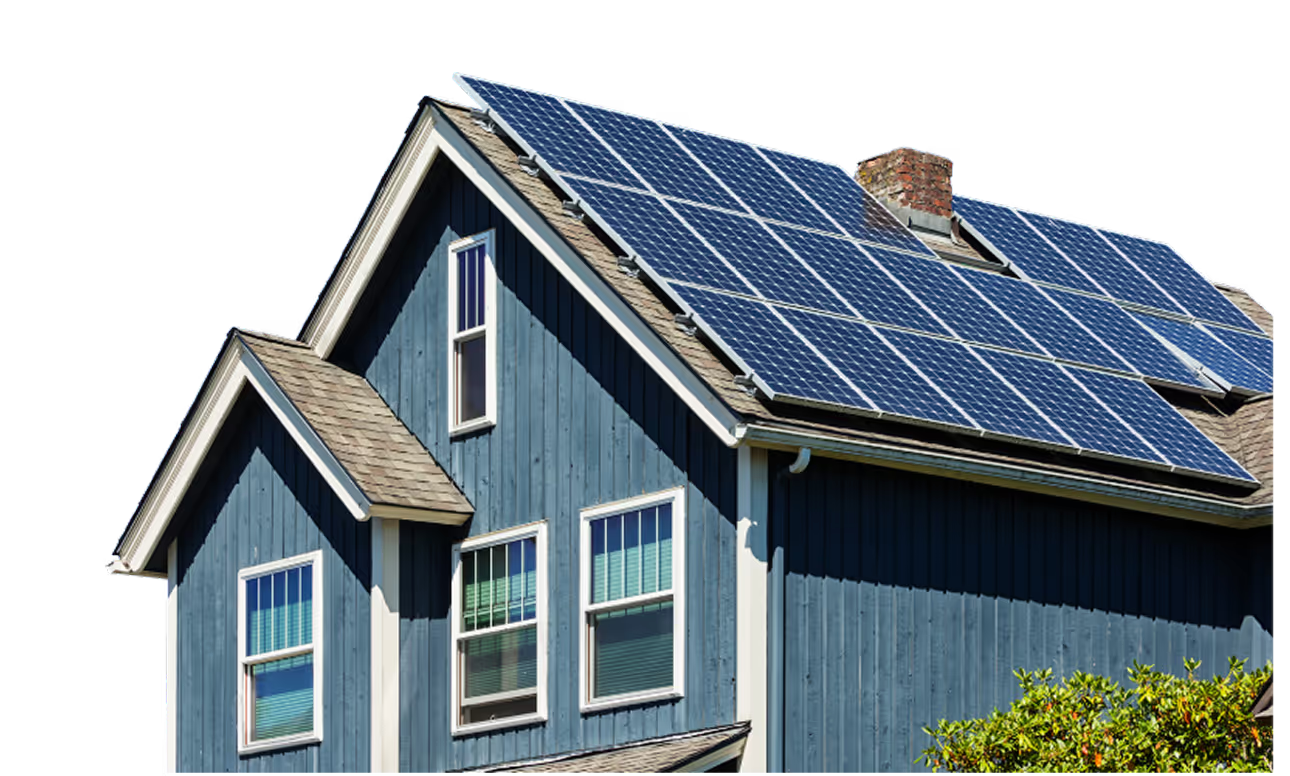
The scale is different too. A landed home using 600 kWh a month needs around 20 kWh a day, roughly 20 times the capacity of a 1kWh unit. That's the job of rooftop solar under Solar ATAP, which offsets your daytime usage directly.
The two work well together. Standard grid-tied solar systems switch off during a TNB outage for safety, so a portable power station covers essentials until the grid returns. If you want solar that keeps running during outages, look at a hybrid solar system with battery backup.
For a deeper look at storage options, see our guide to whether a solar battery is worth the cost in Malaysia.
Portable Power Station FAQs
What size portable power station do I need for a fridge?
At least 1,000Wh for an overnight outage. A typical 2-door fridge uses around 1 to 1.2 kWh a day, so a 1kWh unit keeps it cold for most of a day. For 24 hours or more, step up to 2kWh.
Can a portable power station run an aircond?
Only briefly. A 1.0hp inverter aircond draws around 700W once running, so a 1kWh unit lasts about an hour. Use fans during outages and save the battery for the fridge and router.
Is EcoFlow better than Jackery?
For most Malaysian buyers, EcoFlow has the edge on local support, with an official distributor, local servicing and a 5-year battery warranty. Jackery's Explorer 1000 v2 is lighter, so it suits buyers who carry their unit often.
Can I use a portable power station during a TNB blackout?
Yes, that's one of their main uses. Plug essentials directly into the unit's sockets. Don't connect it to your home's wiring unless a Licensed Electrical Worker (LEW) installs a proper transfer switch.
Is it safe to charge a portable power station indoors?
Yes. Unlike petrol generators, power stations produce no fumes. Keep them in a ventilated spot away from direct sun and water, and follow the manufacturer's charging guidance.
How many years does a portable power station last?
Most LFP units are rated for 3,000 to 4,000 charge cycles, which manufacturers translate to around 10 years of regular use. Lifespan and warranty are different things, so check both.
Will a portable power station reduce my electricity bill?
No. It shifts when you use electricity but doesn't generate any. Only solar panels charging it for free can offset grid power, and portable panels are too small to make a dent in a household bill.
Back Up the Essentials, Then Fix the Bill
For most homes, a 1kWh LFP unit from an authorised Malaysian seller is the right portable power station. The EcoFlow DELTA 3 Plus is the safest all-round pick, the DELTA 3 Classic and DJI Power 1000 V2 give you more for your ringgit, and the DELTA 3 Max Plus suits longer outages. Whichever you choose, buy from an authorised seller so the warranty actually works.
A power station keeps the lights on during an outage. Rooftop solar cuts the bill the rest of the year, and with Rent-to-Own at RM 0 upfront you can start without the upfront cost. Not sure what you're paying for today? Run your numbers through our TNB bill calculator first.
Check out our solar calculator or chat with the team on WhatsApp whenever you're ready.

Rent-to-Own Solar. RM0 Upfront cost. Guaranteed Savings
Immediate ROI



Rent-to-Own Solar. RM0 Upfront cost. Guaranteed Savings
(10-Year RTO plan)
+ 10-Year Free Maintenance

Be part of The Solar Collective, where we share the latest updates, tips, and discussions on solar energy.