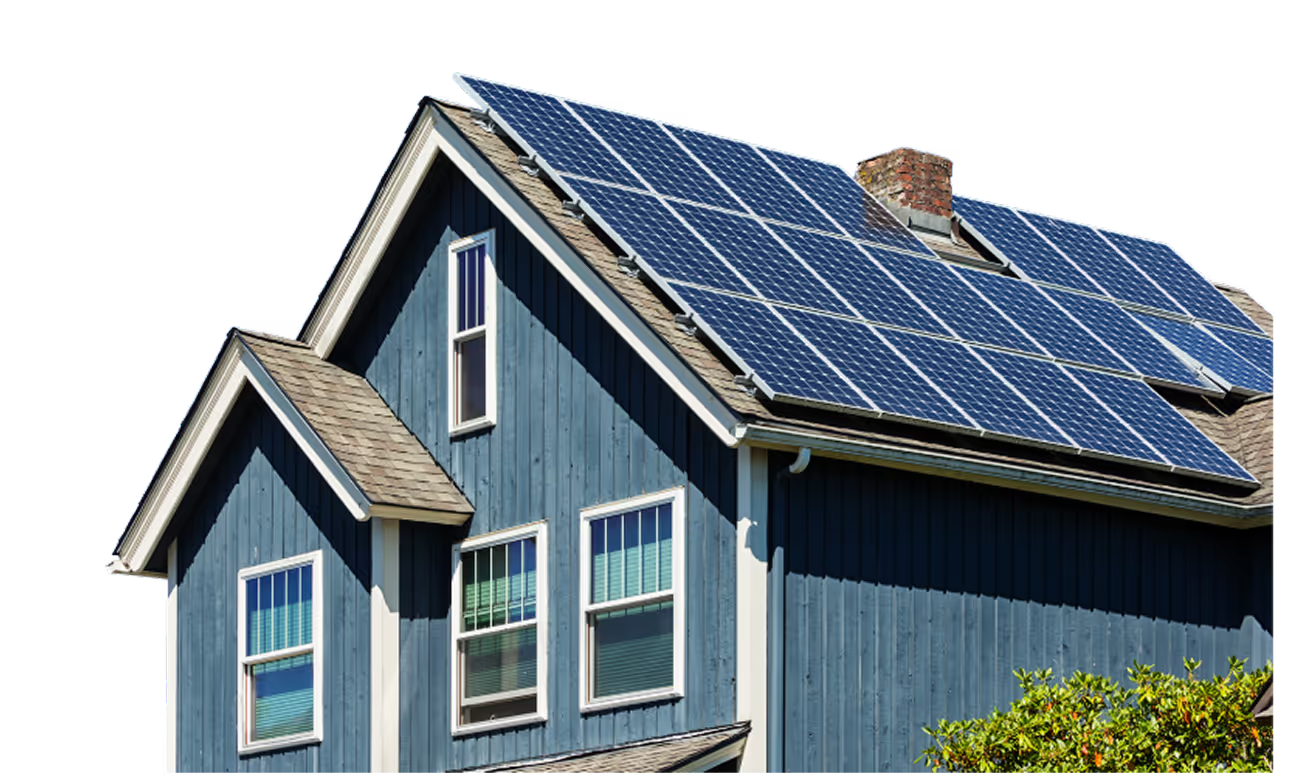
Key Takeaways:
Huawei's SUN2000 home inverters reach up to 98.6% efficiency and work with optional optimisers and batteries. Most inverters last 10 to 12 years and Huawei's standard warranty is 10 years, so plan for one replacement over a 25-year system and ask about an extension. Choose the model by your home's supply type, decide on optimisers by your roof's shade, and read the security section before you sign.
Your solar quote lists an inverter called something like "SUN2000-6KTL-L1", and nobody has explained what that means. . Solar panels get the attention, but the inverter converts the direct current (DC) your panels produce into the alternating current (AC) your appliances use. It sits on your wall for the life of the system.
Huawei is the biggest name on the wall. It shipped 176 GWac of the 589 GWac of inverters sold worldwide in 2024, around 30%, according to Wood Mackenzie's market share report. Over half of global shipments went to Chine, so that figure says little about Singapore rooftops. It does explain why you will see the name often.
At GetSolar, we install the Huawei SUN200, so we are not a neutral party. This guide covers what the numbers mean, what the warranty really protects, and the security debate around Chinese inverters, which you should hear about before you sign.
It is written for landed homes in Singapore. If you're new to how a home system fits together, start with how solar panels work.
Who Makes Huawei Solar Inverters?
Huawei Technologies sells its solar inverters under the FusionSolar brand, alongside its own batteries, optimisers and monitoring app.
Homeowners often see the SUN2000 series of string inverters. A string inverter takes the output from a whole row (string) of panels, unlike microinverters, which sit behind each panel. For the wider picture, see our solar inverter guide for Singapore.
Which Huawei Inverters Suit a Singapore Home?
Huawei makes several SUN2000 ranges. For landed homes, the two to know are the L1 and the M1. Which one you need depends on whether your home runs on single-phase or three-phase supply, which your Licensed Electrical Worker (LEW) confirms during the site survey.
| Spec | SUN2000-L1 (single-phase) | SUN2000-M1 (three-phase) |
| Power range | 2–6 kW | 3–10 kW |
| Peak efficiency | Up to 98.4% | Up to 98.6% (6 to 10 kW models) |
| European weighted efficiency | Up to 97.8% | Up to 98.1% |
| MPPT trackers | Two | Two |
| Battery-ready | Yes (Huawei LUNA2000) | Yes (Huawei LUNA2000) |
| Optimiser-ready | Yes (SUN2000-450W-P2, 600W-P) | Yes (SUN2000-450W-P2, 600W-P) |
| Standard product warranty | 10 years | 10 years |
Sources: Huawei datasheets for the SUN2000-L1 and SUN2000-M1. Efficiency varies by model size within each range.
Peak efficiency is the best-case figure. Weighted efficiency averages performance across different loads, so it is closer to what you will see day to day. Both ranges are efficient and the gap between them is small, so your decision hinges on your supply type, system size and any plans for a battery or optimisers.
An MPPT (maximum power point tracker) adjusts the inverter to pull the most power from your panels as sunlight changes. Two trackers let your installer split panels across two roof directions without losing performance.
Do Huawei Optimisers Make a Difference?
Huawei says its optimisers can deliver up to 30% more energy, which is a best-case figure. Installed behind individual panels, optimisers stop one shaded panel from dragging down the rest of its string. As a bonus, they unlock panel-level tracking in the FusionSolar app.
On an unshaded, single-pitch roof, the gain is typically small and the optimisers add cost. They earn their place on roofs shaded by water tanks, parapets or neighbouring walls. AIKO also lists partial-shading optimisation as a feature of its back-contact panels, so ask your installer how the two interact on your roof.
Can You Add a Battery to a Huawei Inverter?
Yes. Both the L1 and M1 accept Huawei's LUNA2000 batteries, which Huawei lists from 5 kWh up to 30 kWh. Because the inverter is battery-ready, you can add storage later without replacing it. Confirm the exact LUNA2000 models available in Singapore with your installer.
Whether you should is a separate question. Most Singapore homes skip a battery because the added cost outweighs the extra savings. A battery helps most where the home tis empty during the day and uses most of its power after sunset. Our solar battery guide walks through the cost-benefit case.
How Long Do Huawei Inverters Last, and What Does the Warranty Cover?
Lifespan and warranty are different things. Most inverters last 10 to 12 years, and Huawei's standard product warranty is 10 years. A typical system needs one inverter replacement over 25 years, which is worth budgeting for.
| Component | Typical warranty | What it means for you |
| Solar panels (e.g. AIKO Neostar 3S54) | 25 or 30 years, depending on the version | Backed for the full life of the system |
| Huawei SUN2000 inverter | 10 years standard | Plan for one replacement, or buy an extension |
Sources: Huawei and AIKO product warranty terms.
Extensions are common. Wood Mackenzie's latest ranking notes that all of the top 10 inverter manufacturers now offer extensions of 20 years or longer. Across brands, our inverter guide puts the typical extension cost at S$300 to S$800. Ask for the Huawei price in writing.
Key questions for your installer:
- Coverage: Is an extended warranty included in the base quote, or sold separately?
- Claims handling: Who is your local point of contact if a unit fails?
Panel warranties and inverter warranties work differently, and our solar panel warranty guide explains how. For what replacements and upkeep cost, see our solar maintenance and installation cost breakdown.
What Is the Security Debate Around Huawei Inverters?
Modern inverters connect to the internet, which is what enables remote monitoring. Regulators in Europe worry that the same connection could let someone manipulate or shut down electricity generation at scale.
Here is what has happened so far:
- In May 2026, the European Commission restricted EU funding for projects using inverters from suppliers it classes as high-risk.
- The Commission has also proposed a revision of its Cybersecurity Act that could ban such suppliers from the EU market. That proposal is still moving through the European Parliament.
- PV Tech reported in July that the US is weighing a similar ban, citing sources.
- Huawei has repeatedly denied that its equipment poses a security threat.
These measures apply to EU-funded projects, not to Singapore homes. Check EMA's solar guidance for current local rules, since this area is changing quickly.
For a single home, the practical risk is smaller than the grid-level concern, but you can still reduce it. Ask your installer how the inverter connects to the internet, what data goes to the monitoring cloud, and whether remote access can be limited. Then take the basic steps below.
Are Huawei Inverters Safe to Use in Singapore?
For electrical safety and compliance, Huawei inverters follow the same rules as any other brand. EMA does not require a licence for residential solar installations under 1 MWac. A Licensed Electrical Worker (LEW) must still sign off the installation, and SP Group must approve the grid connection.
The SUN2000 range also includes arc-fault protection, which Huawei markets as AI-powered. It shuts the system down if it detects a dangerous electrical arc. Most modern inverters offer a version of this, so treat it as a baseline rather than a differentiator.
Like any device on your home Wi-Fi, the inverter needs basic care:
- Change the default app and Wi-Fi passwords during setup.
- Keep the inverter's firmware up to date through the FusionSolar app.
How Do You Check an Inverter Quote Before You Sign?
Whichever brand is on your quote, ask these six questions first:
- Which exact inverter model is on the quote, and does it match my home's single-phase or three-phase supply?
- Is the inverter sized correctly for my panels?
- Is it battery-ready, and what would adding a battery involve?
- Is the warranty 10 years, or is an extension included in the price? If it is extra, what does it cost?
- Who installs and commissions the inverter, registers the warranty and claims in Singapore?
- How does the inverter connect to the internet, and can remote access be limited?
For a deeper look at sizing, costs and savings for a landed home, see our complete guide to solar energy in Singapore.
Frequently Asked Questions
Are Huawei solar inverters good?
Largely, yes. Huawei's SUN2000 home inverters reach up to 98.6% peak efficiency, work with optional batteries and optimiser, and includes arc-fault protection. Their 10-year standard warranty is shorter than your panels' warranty, so check whether an extension is offered. Also read the security debate above before you decide.
What is Huawei FusionSolar?
FusionSolar is Huawei's solar brand and the name of its monitoring app. The app shows your system's output, battery level and each panel's performance (with optimisers).
How long does a Huawei inverter last?
Most inverters last 10 to 12 years. Huawei covers its SUN2000 home inverters for 10 years as standard, so most 25-year systems need one replacement.
Can I add a battery to my Huawei inverter later?
Yes. The SUN2000-L1 and M1 accept Huawei's LUNA2000 batteries, from 5 kWh up to 30 kWh, without an inverter replacement. Whether a battery pays off depends on your evening usage.
Are Huawei inverters safe?
For electrical safety and compliance, yes. A Licensed Electrical Worker (LEW) signs off the installation and SP Group approves the grid connection, as with any brand. Cybersecurity is a separate, ongoing debate, mainly in Europe. Ask your installer how remote access and cloud connection are handled.
Are Huawei Inverters Worth It?
Huawei's SUN2000 inverters are efficient, battery-ready and widely used, and they are what we install at GetSolar. They are a sound choice for most landed homes, provided you match the model to your supply, add optimisers only where shade justifies them, and plan for a replacement after 10 to 12 years. Get the extended warranty price and the remote-access arrangements in writing before you sign.
Check out our free solar calculator to calculate your potential roof savings, or chat with our solar advisors for a no-obligation assessment.

Rent-to-Own Solar for Business with Guaranteed Performance
Immediate ROI



Rent-to-Own Solar. $0 Upfront cost. Guaranteed Savings
(10-Year RTO plan)
+ 10-Year Free Maintenance

Be part of The Solar Collective, where we share the latest updates, tips, and discussions on solar energy.