Key Takeaways:
Schneider Charge scores highest in our ranking at 91/100, ahead of ABB Terra AC (82) and the Tesla Wall Connector Gen 3 (75). Every home charger in Singapore must be an LTA type-approved model, so check the approval label before you compare features. If you have or plan rooftop solar, pick a charger that can slow down to match your panels' output instead of always charging at full power.
The best home EV charger brands in Singapore aren't always the ones overseas reviewers rave about. Under LTA rules, every charger supplied here must be a type-approved model, and every home unit must be registered before its first charge.
That rule alone shrinks your options. Zaptec and Easee did not appear on LTA's September 2025 list of type-approved models, and neither did Wallbox's Pulsar Plus or Pulsar Max.
Our pick for most landed homes is Schneider Electric's Schneider Charge, which scores 91/100 on our weighted criteria. ABB's Terra AC (82/100) has the lowest published installed price whatever car you drive, from $2,299, and the Tesla Wall Connector Gen 3 (75/100) is the simplest route for Tesla owners.
This guide ranks 5 brands against 6 weighted criteria and shows which chargers make the most of rooftop solar. Every score uses public specs and published Singapore prices you can check yourself, so brands that publish more information score higher. If you're still working out what installation costs, start with our complete guide to EV home charging in Singapore.
Best Home EV Charger Brands in Singapore at a Glance
Schneider Electric's Schneider Charge is the best all-round home EV charger for a landed home, scoring 91/100 in our ranking. Here's how the top 5 compare:
Sources: LTA List of Type Approved Models (September 2025), Tesla Singapore, ElectGo (2026), manufacturer datasheets. Prices include GST where listed and may change.
How Did We Rank These Home EV Chargers?
We scored every brand from 1 to 5 on 6 criteria, then weighted the scores to a total out of 100. Approval carries the most weight because an unapproved charger can't be legally supplied or registered in Singapore, regardless of its features.
Our ranking rewards brands that publish clear Singapore pricing and warranty terms, so a charger with strong features but quote-only pricing can rank lower.
What Makes a Good Home EV Charger in Singapore?
A good home charger in Singapore is LTA type-approved first and smart second. Beyond approval, 4 specs separate a good unit from a frustrating one:
- Power rating: 7.4 kW single-phase suits most landed homes and adds around 35–40 km of range per hour. 22 kW needs three-phase supply and a car that accepts 22 kW AC.
- Built-in DC leakage protection: A 6 mA DC residual current detector inside the charger means your installer doesn't need to fit a separate, pricier Type B residual current device (RCD).
- Weatherproofing: Many carports are open to the rain. Look for IP54 at minimum, IP55 if the unit faces driving rain, and IK10 against knocks from car doors and bicycles.
- Solar and load control: A charger that slows down to match spare solar output or household load avoids grid draw and tripped breakers.
The 5 Best Home EV Charger Brands in Singapore, Ranked
1. Schneider Electric (Schneider Charge): Best Overall for Landed Homes
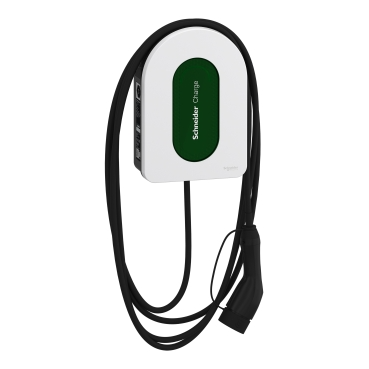
Schneider Charge is the best all-round home EV charger in Singapore, scoring 91/100 for its published local pricing, rugged build and renewable-aware scheduling. The single-phase model (EVH5A07N2C7) delivers 7.4 kW through a tethered 7 m Type 2 cable, which reaches most driveways without an extension. It carries IP55 and IK10 ratings, so an open carport in a heavy downpour is no problem.
Through Schneider's Wiser app, you can schedule charging to prioritise renewable energy, and an optional anti-tripping accessory throttles the charger when household load spikes. ElectGo lists the 7.4 kW unit at $1,308 including GST, with installation bundles from $2,599 endorsed by a Licensed Electrical Worker (LEW) that include 24 months of product warranty and 12 months on the installation.
Watch out for: Schneider's solar features are scheduling-based, not live surplus tracking, and depend on how the Wiser app links to your inverter and energy meter, so ask your installer to confirm the setup works with your solar system before you buy.
2. ABB Terra AC: Best Value Installed Package
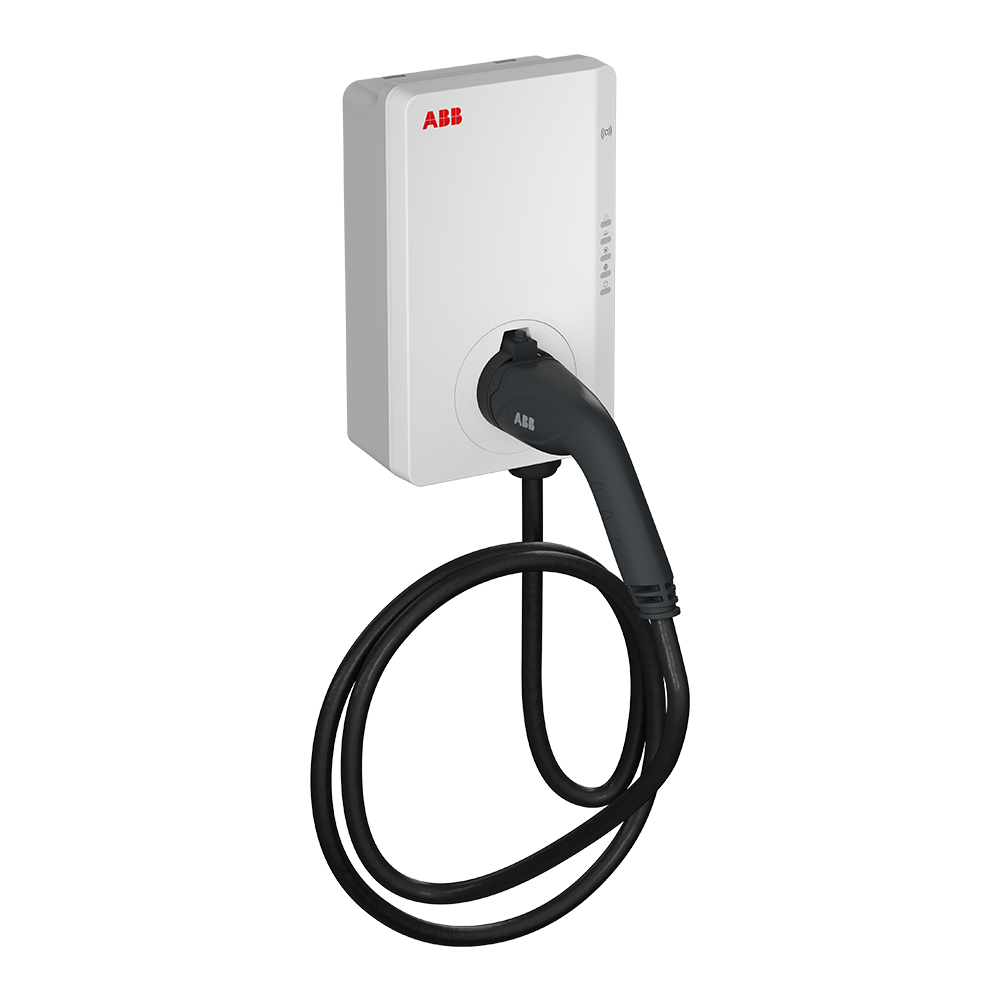
ABB's Terra AC has the lowest published installed price in Singapore, whatever car you drive, with bundles from $2,299 at ElectGo. LTA's type-approved list covers 6 Terra AC variants from 7 kW to 22 kW, including socket and tethered versions with RFID and 4G. ABB rates the range at up to 7.4 kW single-phase and 22 kW three-phase, with IP54 and IK10 protection across all variants.
The built-in energy meter is its often-overlooked benefit. Through OCPP and Modbus (standard protocols that let chargers talk to energy management systems), the Terra AC links to energy management and solar systems, and an add-on ABB meter enables dynamic load management, so the charger backs off when your AC and water heater run. ABB's datasheet lists a 24-month warranty.
Watch out for: ABB designs the Terra AC for homes and businesses alike, so its ChargerSync app is functional rather than polished. Expect fewer home-friendly touches than the Tesla or Wallbox apps.
3. Tesla Wall Connector Gen 3: Best for Tesla Owners
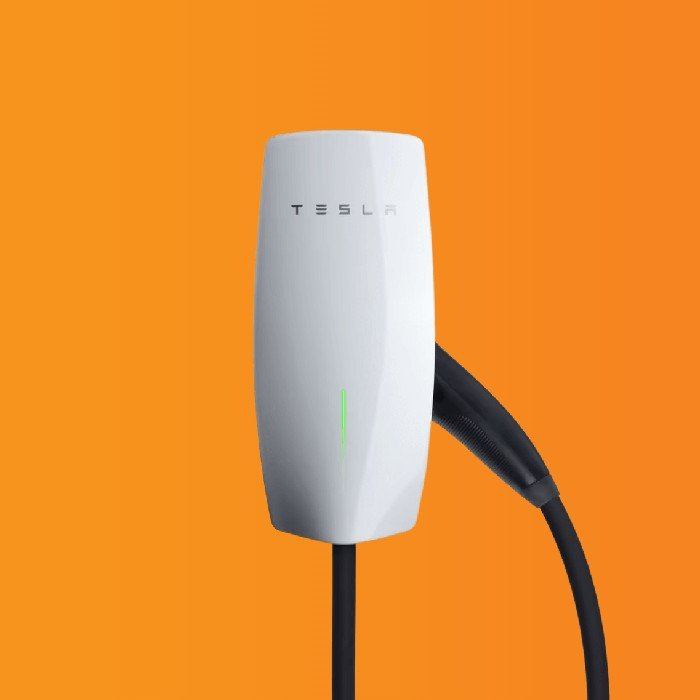
For Tesla drivers, the Gen 3 Wall Connector is the simplest home charger in Singapore: $790 for the unit, with standard installation quoted at $1,500–$3,500. Tesla's Singapore shop states that only a Tesla Certified Installer can buy and install it, to meet the TR25 EV charging standard, and purchases are limited to verified Tesla owners.
The unit comes with a 7.3 m cable, and Tesla says it adds up to 71 km of range per hour of charging. Multiple Wall Connectors can share power, which helps two-Tesla households on a single supply. Tesla's quoted installation range covers cable runs up to 30 m, so ask your Tesla Certified Installer for defect liability terms in writing.
Watch out for: The Wall Connector doesn't track your solar output on its own. You can schedule daylight charging in the Tesla app, but it won't speed up or slow down to match what your panels produce.
4. Wallbox: Best Smart Features, If You Get an Approved Model
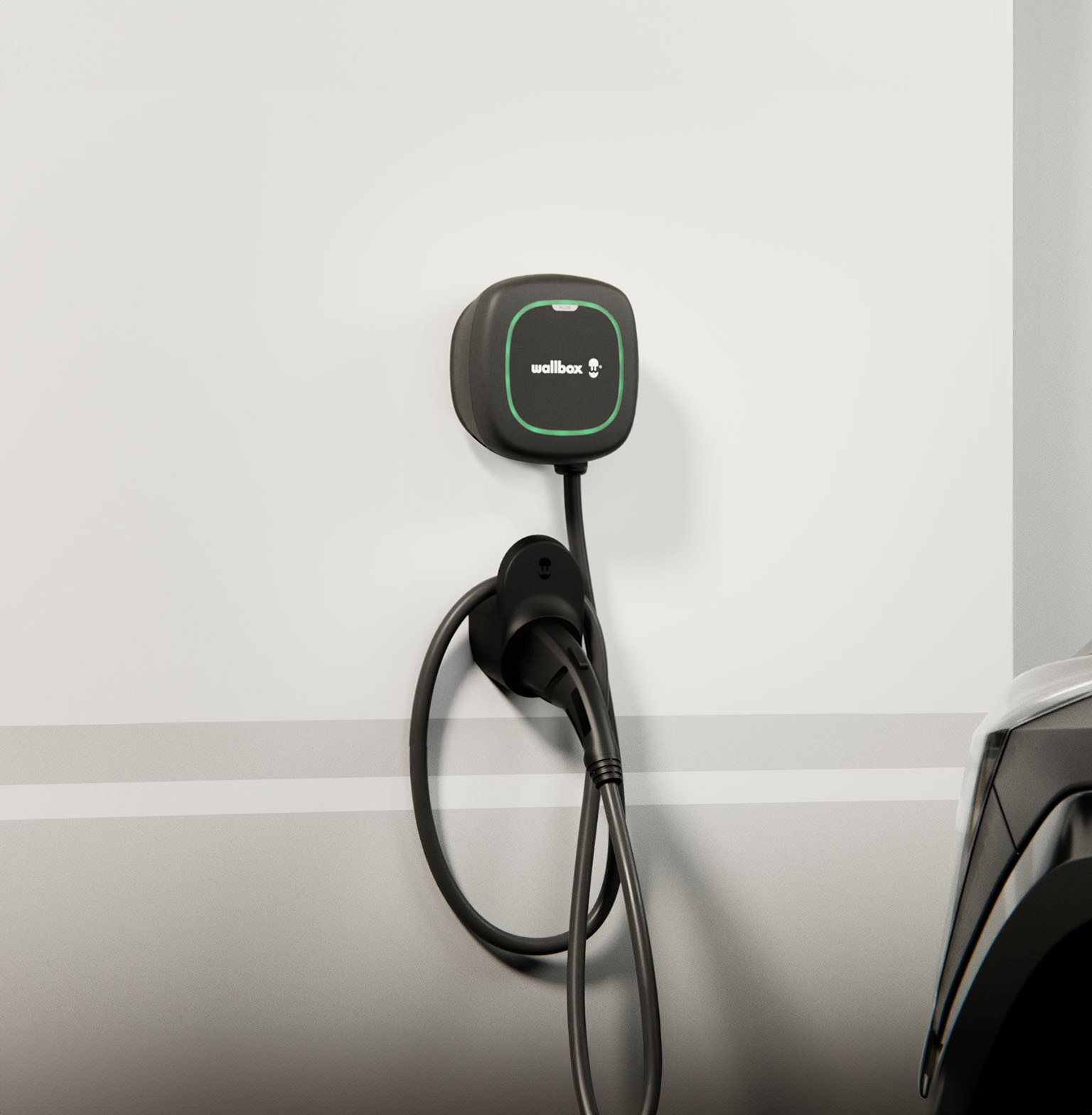
Wallbox has the strongest smart-charging toolkit on this list, but only its Commander 2 and Pulsar Pro appeared on LTA's September 2025 type-approved list. The home-focused Pulsar Plus and Pulsar Max did not appear on that list. Interwell, Wallbox's exclusive distributor in Singapore, supplies the approved models.
The myWallbox app handles scheduling, usage history and remote locking, and Power Boost uses a power meter to balance the charger against household load. Eco-Smart mode charges from surplus solar on supported models paired with a Wallbox power meter, the most direct solar-following option among these 5 brands. Commander 2 adds a touchscreen, RFID and PIN access, handy if several family members share the car.
Watch out for: No published Singapore pricing, and Commander 2 is built for shared sites, so you pay for features a single-car home won't use. Ask Interwell to confirm Eco-Smart support on the specific approved model before you buy.
5. Autel MaxiCharger AC: A Solid Mid-Range Alternative
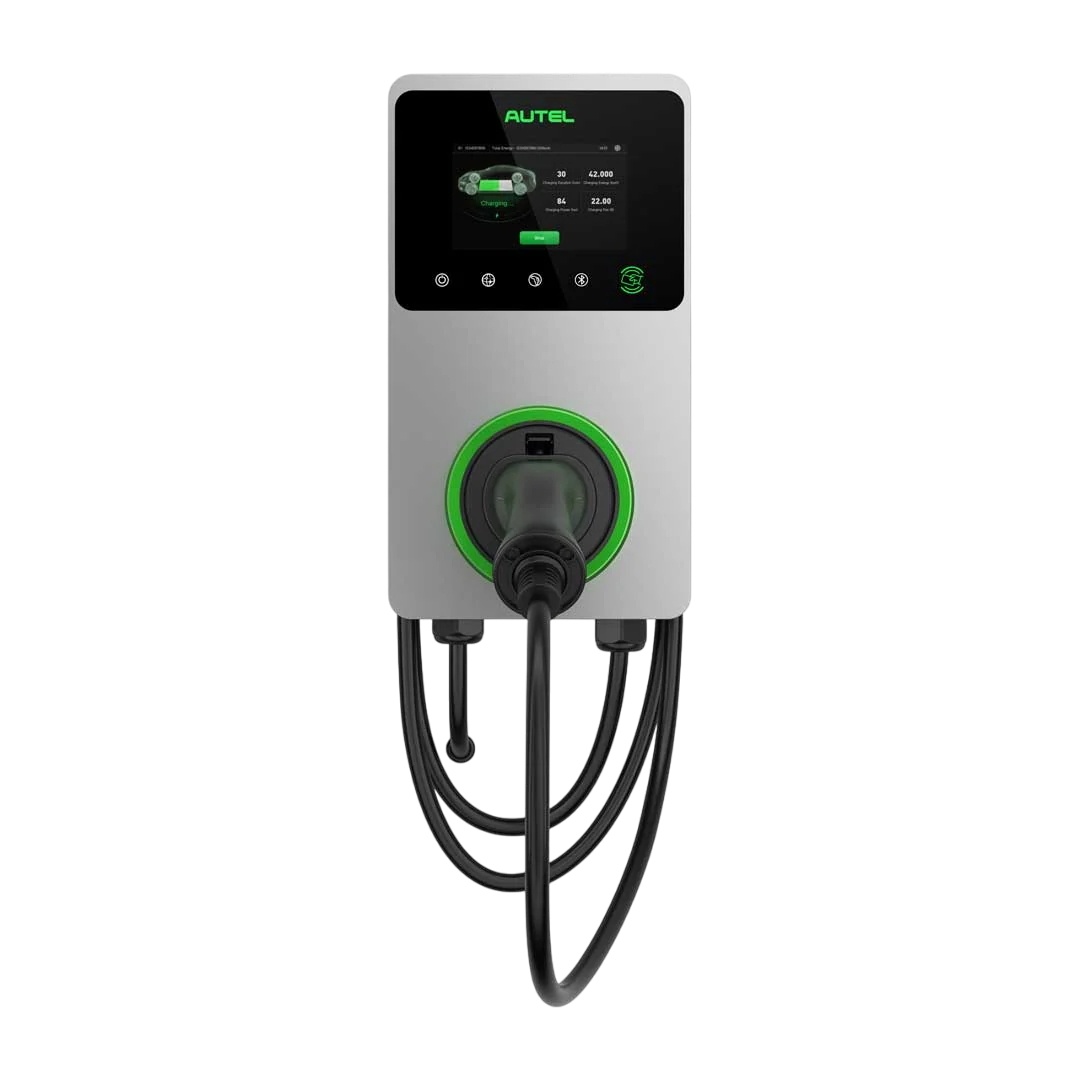
Autel's MaxiCharger AC is type-approved in Singapore in 7 kW and 22 kW versions, giving landed homeowners a credible alternative to the European brands. Autel is better known here for its DC fast chargers, with sites at the National University of Singapore and Gain City, but its AC wallboxes cover home charging.
The Autel Charge app covers scheduling, remote start and stop, and charging history, with over-the-air firmware updates. That's enough for most owners who charge overnight and don't need the charger to follow their solar output.
Watch out for: Autel publishes no Singapore pricing or local warranty terms, and its solar features are limited compared with Wallbox or ABB. Get the warranty in writing from your installer before you sign.
Do You Need a 7 kW or 22 kW Home Charger?
Most landed homes are well served by a 7.4 kW charger, because it fully charges most EVs overnight.
Source: Guide based on typical landed home installations. Ask your LEW to confirm your supply and spare capacity.
A 22 kW charger only charges at 22 kW if your car accepts it, and many EVs cap AC charging at 7 kW or 11 kW. Check your car's spec sheet before paying for three-phase hardware.
If you haven't picked an installer yet, our guide to EV charger installers in Singapore compares the main options.
Which Home EV Charger Works Best With Rooftop Solar?
A charger that automatically slows down to match your real-time solar generation lets your roof do more of the work. A standard charger that only runs at full power will draw from the grid whenever your panels can’t keep up.
- A typical EV driver in Singapore uses around 250–300 kWh a month, or 8–10 kWh a day, based on GetSolar landed installation data.
- A 10 kWp landed solar system generates around 1,000–1,100 kWh a month, or 33–36 kWh a day.
- Your car needs roughly a quarter of a 10 kWp system's daily output.
Timing matters. Solar only charges your car directly if it’s plugged in while the sun is up. If you charge overnight, your panels offset your household usage and export any surplus instead, unless you add a home battery. A standard 7.4 kW charger at full power can also outpace your roof’s live output, so you draw grid power on cloudy days. A solar-optimised charger adjusts its speed to your spare solar power in real time.
Sources: manufacturer product pages and datasheets.
If you already have solar, Wallbox and ABB give you the most control, with Schneider close behind. If you're sizing a new system with an EV in mind, add the car's 250–300 kWh a month to your household load; our solar panel installation cost guide shows what the extra panels cost.
What Does LTA Require Before You Use a Home Charger?
Every home charger in Singapore needs 3 things before its first charge: an approved model, a certificate of fitness, and LTA registration.
- Buy an approved model: Enter the type approval ID from the charger's label on LTA's OneMotoring site and check that the details match the unit.
- Get it installed and certified: A Licensed Electrical Worker (LEW) installs the charger, and you receive a Certificate of Fitness once it's certified as fit for charging.
- Register with LTA: Register yourself or let your installer submit for you, then pay the fee. You can use the charger once registration succeeds, and you must fix the registration mark to it within 60 days.
Source: LTA, Registration of EV Chargers. Fees fixed until 31 March 2027; GST does not apply.
Every charger on this list is below the 23 kW tier, so budget $375 for a landed home. After that, LTA requires an inspection by a certified equipment specialist every 24 months, and you must keep the certificates for at least 2 years.
Strata-titled cluster houses and townhouses need LTA to confirm their charger location counts as restricted access before the landed-home rules apply.
For a deeper look at installation costs and electrical supply upgrades, see our EV home charging guide.
Frequently Asked Questions
What's the best EV charger for a landed home in Singapore?
Schneider Charge scores highest in our ranking at 91/100, thanks to published local pricing, an IP55/IK10 build and renewable-aware scheduling. ABB Terra AC is the best-value installed package from $2,299, and Tesla owners should look at the Wall Connector Gen 3.
Can I buy an EV charger online and install it myself?
No. Only LTA type-approved models can be supplied in Singapore, and a fixed charger must be installed and certified before LTA will register it. A charger bought online without an approval label can't be registered.
How do I check if a charger is LTA-approved?
Look for the LTA approval label on the unit and enter its type approval ID on OneMotoring. The details shown should match the charger in front of you.
Is a 7 kW charger enough, or do I need 22 kW?
For most landed homes, a 7.4 kW charger is enough. It adds around 35–40 km of range per hour and charges most EVs overnight. 22 kW only helps if you have three-phase supply and a car that accepts 22 kW AC.
Can I get a Tesla Wall Connector if I don't drive a Tesla?
In Singapore, Tesla limits Wall Connector purchases to Tesla owners, and only Tesla Certified Installers can buy and install it. If you drive another brand, look at Schneider, ABB or Wallbox instead.
Can my home EV charger run on solar power?
Yes, if your car is charging while your panels are producing. A solar-optimised charger such as Wallbox with Eco-Smart adjusts its speed to match spare solar output, so less of your charging comes from the grid. If you charge overnight, your panels offset your household usage instead of charging the car directly.
How much does it cost to register a home EV charger with LTA?
A typical landed home charger below 23 kW costs $375 to register, with fees fixed until 31 March 2027. Transferring or relocating a registered charger costs $35.
What happens if my charger brand goes out of business?
The charger keeps working, but app features and firmware updates may stop. Choose a brand with an established distributor in Singapore, and get warranty terms in writing before you pay.
Choose a Charger That Fits Your Home and Your Roof
Your charger decides how fast your car fills up. Your power source decides what every kilometre costs. For most landed homes, an LTA-approved 7.4 kW charger with solar-aware scheduling is the sweet spot, and Schneider Charge and ABB Terra AC give you the clearest prices to start from.
Pair it with a rooftop system sized for your car's extra 250–300 kWh a month, and any charging you do while the sun is up can run largely on your own solar instead of the grid. With Rent-to-Own solar, you can add the panels at $0 upfront, and our guide on how to read your electricity bill shows where the savings land.
Check out our free solar calculator to calculate your potential roof savings, or chat with our solar advisors for a no-obligation assessment.

Rent-to-Own Solar for Business with Guaranteed Performance
Immediate ROI



Rent-to-Own Solar. $0 Upfront cost. Guaranteed Savings
(10-Year RTO plan)
+ 10-Year Free Maintenance

Be part of The Solar Collective, where we share the latest updates, tips, and discussions on solar energy.