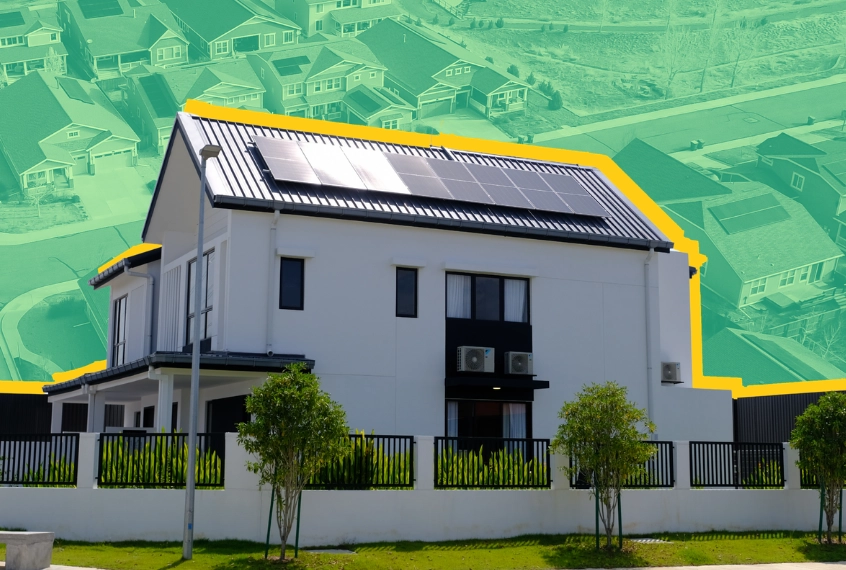
Energy in Malaysia is entering a new chapter, and so is solar. As the Net Energy Metering (NEM) scheme winds down, solar homeowners are preparing for the transition to Solar ATAP, Malaysia's new rooftop solar framework launching on 1 January 2026.
Alongside this shift, many homeowners are hearing a new term: the System Marginal Price (SMP) and naturally, it has raised questions.
If you’ve been wondering what this means for your savings, you’re not alone. Many homeowners are asking the same question:Will solar still pay off if electricity export prices change with market conditions?
In this article, we’ll break down how the SMP works, where it applies under Solar ATAP, and what it really means for everyday Malaysians who want to save on their Tenaga Nasional Berhad (TNB) bills while supporting a clearner grid.
Spoiler: with the right setup and smart use of your solar power Solar ATAP remains one of the most practical, future-proof energy choices you can make.
What Is the System Marginal Price (SMP)?
The System Marginal Price (SMP) is Malaysia’s wholesale electricity price.
It represents the cost of supplying the next unit of electricity needed to meet demand on the national grid.
Instead of a fixed rate like under the previous Net Energy Metering (NEM 3.0) scheme, the SMP changes over time depending on:
- Real-time electricity demand
- Available generation on the grid
- Fuel and operating costs
In simple terms:
When the grid needs more power such as on hot afternoons when air conditioners are running the SMP rises. When demand drops, the SMP falls.
This means the value of electricity at the wholesale level is not constant, but reflects real-time market conditions.
While that may sound complex, the goal is straightforward: Malaysia wants to build a more dynamic and transparent energy market, especially as more renewable energy comes online.
How SMP Impacts Solar ATAP Users
Under NEM, every kilowatt-hour (kWh) of electricity exported to the grid earned a near 1-to-1 offset against your bill. You always knew exactly what your exported energy was worth.
Under Solar ATAP, export valuation works differently but not the same way for everyone.
A Key Clarification for Homeowners
For residential homeowners, exported solar energy under Solar ATAP is not paid at wholesale SMP.
Instead, residential exports are credited at retail-linked energy rates, based on monthly household consumption:
- ~RM 0.27/kWh for homes using up to 1,500 kWh/month
- ~RM 0.37/kWh for homes using more than 1,500 kWh/month
SMP primarily applies to commercial and non-domestic users, not residential households.
That said, SMP still plays a role in shaping how Malaysia’s electricity market works and understanding it helps homeowners plan smarter.
1. Self-Consumption Matters More Than Ever
Your biggest solar savings still come from using your solar energy directly.
Every unit you consume from your own panels is one less unit bought from TNB at the retail tariff and this saving is:
- Immediate
- Predictable
- Unaffected by SMP
That’s why households with higher daytime usage such as air-conditioning, appliances, or home offices continue to see steady, reliable savings.
2. Export Value Still Matters, But Isn't Everything
If you export excess energy to the grid, it still contributes to savings through retail-linked export credits.
While export pricing mechanisms differ from NEM, they are not reduced to volatile wholesale pricing for homes, and they complement rather than replace self-consumption savings.
3. Smart Energy Use Pays Off
Solar ATAP encourages smarter energy habits, such as:
- Running energy-intensive appliances during daylight hours
- Optimising system size based on actual household demand
This marks a shift from passive savings to more intentional energy management where homeowners stay in control.
The Role of Battery Storage
As Malaysia modernises its electricity system, battery storage is becoming a practical option not a requirement, but a powerful upgrade.
1. Store Energy for Night Use, Not Export
With a battery, solar energy can be stored during the day and used at night when grid electricity from TNB is most expensive.
This reduces dependence on export pricing altogether and maximises self-consumption.
2. Reduce Dependence on the Grid
Batteries help households rely less on TNB, especially during evening peak hours offering better protection against future tariff increases.
3. Strengthen Backup and Energy Resilience
Battery systems also provide backup during power disruptions, keeping essential appliances running when the grid goes down.
4. Future-Proofing Your Solar Investment
Battery storage prepares homeowners for future developments such as demand response and time-of-use tariffs, where smart energy use can unlock even more savings.
Financial Reality: Is Solar Still Worth It Under SMP?
The short answer? Yes.
Even as Malaysia transitions toward market-based electricity pricing, the majority of household solar savings still come from avoiding TNB’s retail tariffs, not from selling electricity back to the grid.
1. Savings Driven by Self-Consumption
For homes with daytime usage, solar can offset 70–80% of total consumption, delivering strong and predictable bill reductions.
2. Export Credits Are Only Part of the Picture
Only excess solar electricity you don’t use immediately is exported. Even if export values change over time, it affects just a portion of your system’s output.
3. Rent-to-Own Makes Solar Accessible
With GetSolar’s Rent-to-Own (RTO) plans, homeowners can go solar with minimal upfront cost:
- 10-year plan: From RM267/month, 0 upfront, with full warranty and maintenance
- 5-year plan: From RM167/month, ~50% upfront, includes full system care
This makes it easier to hedge against rising electricity prices without financial strain.
4. Long-Term Payback Still Strong
Even under Solar ATAP, solar remains attractive thanks to:
- Consistent daytime savings
- Rising grid electricity rates
- Long-term equipment warranties
How Much Can You Save with Solar ATAP?
Below is an example focused on self-consumption and battery-supported savings, which remain the foundation of household solar returns.
Example: 15.4 kWp Solar System + 42 kWh Battery
- Before Solar: RM900 monthly TNB bill
- After Solar: ~RM11–12 average monthly bill
- Total Savings: Up to 99% reduction in electricity costs
- Ownership: Solar system is yours after 10 years, at no extra cost
.png)
Even as policies evolve, one principle remains constant: the biggest savings come from consuming your own solar power.
Solar ATAP: The Future Still Looks Bright
Malaysia’s move toward market-aligned electricity pricing reflects a broader push for a cleaner, more resilient energy system.
For homeowners, the fundamentals haven’t changed. Solar ATAP continues to reward:
- Smart system sizing
- High self-consumption
- Long-term planning
Policy may evolve — but solar’s value doesn’t disappear. It adapts.
Ready to see how Solar ATAP could work for your home?
- Try our Solar Savings Calculator
- Or chat with us on WhatsApp for a personalised, no-pressure quote

Rent-to-Own Solar. RM0 Upfront cost. Guaranteed Savings
Immediate ROI



Rent-to-Own Solar. RM0 Upfront cost. Guaranteed Savings
(10-Year RTO plan)
+ 10-Year Free Maintenance

Be part of The Solar Collective, where we share the latest updates, tips, and discussions on solar energy.