.png)
[Updated, May 2026]
When building a house in Malaysia, there's more to consider than finishes and floor plans. With TNB's base electricity tariff now 14.2% higher under Regulatory Period 4 (RP4, 2025–2027), and the new Solar ATAP programme replacing NEM from January 2026, planning for solar from the start has never made more financial sense.
Homeowners who factor solar into their new build can save on installation costs, avoid structural workarounds, and start generating savings from day one. Here's everything you need to know.
Why 2026 Is a Smart Year to Plan Solar into Your New Build
Two major changes have reshaped the Malaysian solar landscape since mid-2025:
1. TNB tariffs went up
Under RP4, the base electricity tariff rose to 45.62 sen/kWh — a 14.2% increase from the previous regulatory period. Combined with the ICPT surcharge of 3.70 sen/kWh (Jan–Jun 2026) and a restructured billing system effective 1 July 2025, Malaysian households now face a more complex — and potentially more expensive — electricity bill.
2. Solar ATAP replaced NEM
The Net Energy Metering (NEM 3.0) programme closed in June 2025. In its place, the Solar Accelerated Transition Action Programme (Solar ATAP) launched on 1 January 2026. Key improvements for new homeowners:
- No quota limits — unlike NEM, any eligible TNB residential consumer can apply without waiting for quota slots
- Larger system sizes — install up to 100% of your maximum demand (previously capped at 80%)
- Retail-linked export rates — residential homeowners receive approximately RM 0.27–0.37 per kWh for excess electricity exported to the grid, depending on consumption tier
- No credit rollover restriction under SELCO — if you opt for the Self-Consumption (SELCO) model instead, 100% of generated energy is used on-site with no grid interaction needed
For most new homeowners in Peninsular Malaysia, Solar ATAP is the recommended programme in 2026 due to no quota restrictions and its credit structure. Your installer can advise on whether ATAP or SELCO better suits your usage profile.
Solar ATAP vs SELCO: Which Programme Applies to New Homeowners?
Under Malaysia's current (2026) framework, two main options are available for residential solar:
For most new homeowners, Solar ATAP is the default recommendation since it gives you grid export credit while still prioritising self-consumption. SELCO may suit commercial-scale residential builds or homes that pair solar with a battery storage system.
What Are The Key Considerations When Building A House In Malaysia?
How Should You Design Your Roof for Solar Installation?
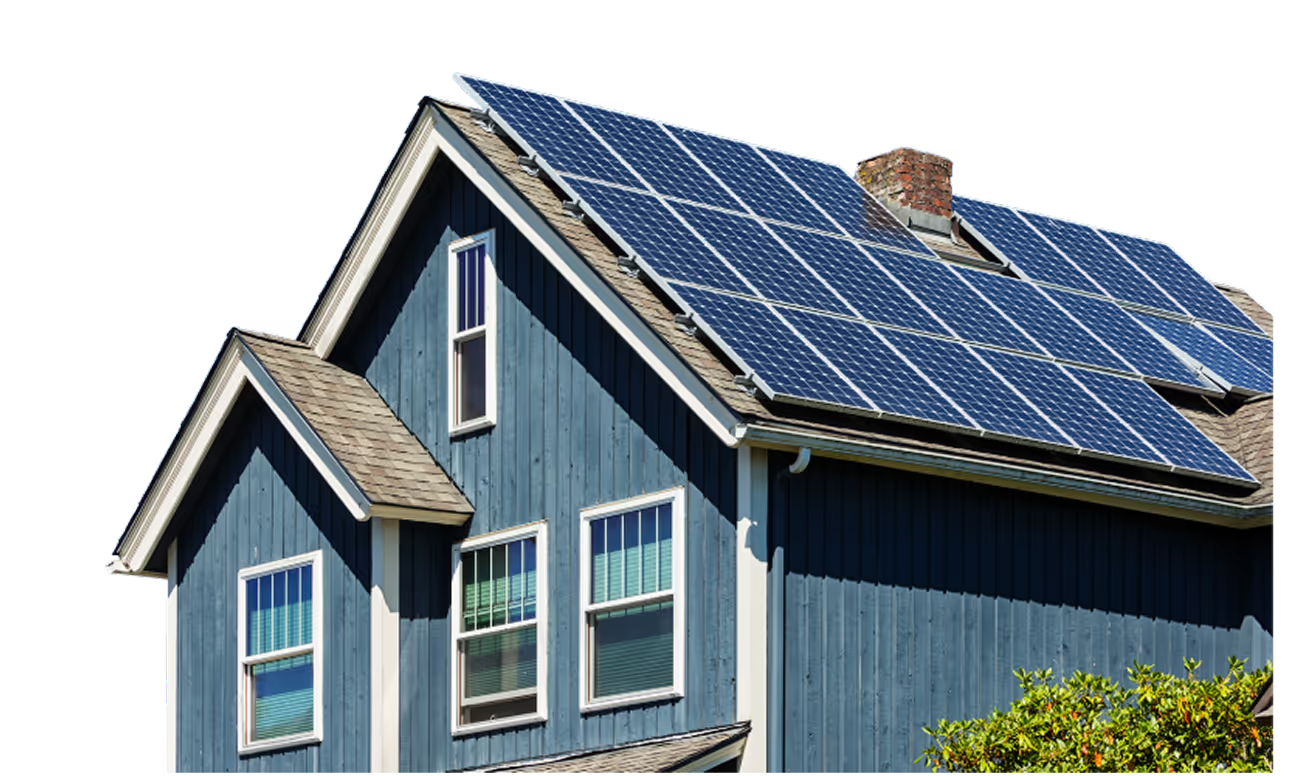
An unobstructed roof is critical for maximising solar panel coverage. The more continuous roof area you have, the more panels you can install in a single setup — which reduces your cost per kilowatt-peak (kWp), since labour typically accounts for up to 50% of total system costs.

Best practice: Place obstacles like vent pipes, skylights, and water tanks towards the side of the roof rather than the centre. If that isn't possible, cluster them together rather than scattering them — multiple isolated obstacles create more shading dead zones than one grouped cluster.
What Is the Best Roof Material for Solar Panels in Malaysia?
The two most solar-friendly roof types are:
- Standing seam metal roof — clamps attach directly to the seam; zero roof penetration required
- Concrete flat roof — ballasted mounts hold panels in place without drilling

Both eliminate the need for penetration-based mounting, reducing waterproofing risk and future maintenance costs. For other roof types (clay tiles, asphalt shingles, zinc sheets), mounting methods vary. Refer to GetSolar's step-by-step solar installation guide for Malaysia for specifics on each roof type.
What Is the Ideal Roof Angle for Solar Panels in Malaysia?
Aim for a roof tilt of no more than 30 degrees. Flat or low-pitch roofs (0–10 degrees) are optimal since they allow for easy panel cleaning, better airflow under the panels (reducing heat losses), and lower wind load.

Because Malaysia sits close to the equator, roof direction matters very little. North, south, east, and west-facing roofs all produce comparable solar yields. This is a significant advantage over countries in higher latitudes where south-facing roofs are heavily preferred.
Learn more about how roof angle and direction affect solar performance in Malaysia.
Why Is Easy Roof Access Important for Solar Installation?
Roof access affects both your installation cost and long-term maintenance experience. A vertical access ladder or an open attic balcony that provides direct roof access will:
- Reduce scaffolding costs during installation
- Make panel cleaning and servicing straightforward
- Cut future maintenance costs over your system's 25+ year lifespan
Should You Add a 3-Phase Sub Distribution Board Box on the Attic Floor?
Not mandatory, but highly recommended. Installing a 3-phase sub distribution board (sub DB) box on the attic floor offers several advantages:
- Shorter cable run between your inverter and the DB box
- Lower transmission losses
- Cleaner, easier-to-conceal cabling from the start
For more technical context, here’s a useful external guide on three-phase distribution boards.
What Are the Design Considerations Before Solar Installation in Malaysia?
Where Should the Inverter Be Placed?
The inverter should be wall-mounted in a well-ventilated, sheltered location away from direct sun and rain. Most homeowners place it in the attic balcony area, which keeps cable runs between the panels and inverter short, minimising DC losses.
Inverters should not be installed in enclosed, poorly ventilated spaces because heat is the primary cause of inverter degradation and warranty issues.

Can Solar Panel Wiring Be Concealed in Malaysian Homes?
Cabling between solar panels and inverter is typically run in surface conduit (exposed), as panels are roof-mounted and concealment is impractical. However, the wiring between your inverter and DB box can usually be concealed within your wall structure. This is much easier to plan during construction than after.
Before installation, your solar installer will walk through cabling paths, whether trunking is needed, and where to provision conduit during the build phase.
Timeline: When Should You Plan Solar for a New Build?
Start Looking for a Solar Installer 6 Months Before CCC
We recommend engaging a solar installer around 6 months before you expect to receive your Certificate of Completion and Compliance (CCC). This gives time for:
- System design and sizing based on your home's electrical load
- Inverter placement discussions with your architect or M&E contractor
- Cabling and conduit provisions to be built in during construction
- Solar ATAP pre-registration planning
Use this window to explore GetSolar's solar price plans for Malaysia, including Rent-to-Own options with RM 0 upfront.
Solar Panels Can Only Be Installed After Your CCC Is Issued
Installation cannot begin until your CCC is issued — starting before this can complicate electrical submissions and utility approvals. Once your CCC is in hand, physical installation typically takes 3–7 days depending on system size.
How Long Does Commissioning and Grid Connection Take?
After installation, TNB needs to install a bidirectional smart meter so your system can log both consumption and export. This typically takes 2–4 weeks, but can extend to up to 3 months during high-demand periods.
Plan for this lag when estimating your savings start date — especially if you're moving in around peak installation season (typically Q1 and Q4 when many constructions complete).
What About Battery Storage?
In 2026, pairing solar with a Battery Energy Storage System (BESS) is increasingly popular for new builds, particularly for homes with high evening energy usage. With TNB's new Time-of-Use (ToU) tariff option (effective July 2025), batteries allow you to:
- Store solar energy generated during the day
- Discharge during peak-rate hours (2 PM – 10 PM on weekdays)
- Further reduce your dependence on the grid
If you're considering a BESS, plan for this during construction — battery systems require dedicated wall space (typically in the utility area or garage), adequate ventilation, and proper electrical provisions.
Note: BESS is mandatory for solar systems above 1MWac under current SELCO regulations (effective 1 January 2026), but this threshold is far above typical residential system sizes.
Getting Started: How to Integrate Solar When Building a House in Malaysia
The earlier you plan, the smoother the integration. Here's a simple checklist for new build homeowners:
During design phase:
- Maximise unobstructed roof area; cluster obstacles to one side
- Specify standing seam metal or concrete flat roof if possible
- Keep roof tilt at or below 30 degrees
- Provision an access ladder or attic balcony for roof access
- Add a 3-phase sub DB box in the attic space
- Reserve a ventilated wall space for the inverter near the attic
During construction phase:
- Engage a solar installer 6 months before expected CCC
- Provision conduit runs from roof to inverter location and down to DB box
- Discuss Solar ATAP vs SELCO suitability with your installer
Post-CCC:
- Schedule installation (3–7 days once CCC is issued)
- Apply for Solar ATAP and TNB bidirectional meter (2–4 weeks typical)
- Start saving
If you're further along in construction or already moved in — don't worry. Retrofitting solar is entirely possible; you may just need external trunking for cabling depending on your DB box location.
Explore Your Options with GetSolar
Try our instant solar assessment tool to estimate your home's solar potential — even before construction is complete.
You can also explore GetSolar's Rent-to-Own solar plans for Malaysia:
- RM 0 upfront — no capital outlay
- Fixed monthly payments from RM 248/month (10-year RTO plan)
- 25-year panel warranty + 10 years free maintenance included
- Guaranteed output — we pay you back if targets aren't met
- System is yours to keep at the end of the term
With TNB tariffs continuing to rise and Solar ATAP removing the old quota barriers, 2026 is one of the best windows yet to go solar in Malaysia — especially when you're building from scratch.

Rent-to-Own Solar. RM0 Upfront cost. Guaranteed Savings
Immediate ROI



Rent-to-Own Solar. RM0 Upfront cost. Guaranteed Savings
(10-Year RTO plan)
+ 10-Year Free Maintenance

Be part of The Solar Collective, where we share the latest updates, tips, and discussions on solar energy.



.webp)