Key Takeaways:
A plug-in surge strip is not a lightning arrester. For most Malaysian homes, the first layer worth getting is a lightning surge arrester in the main distribution board, backed by good earthing. Rooftop protection only makes sense if a risk assessment shows your house is exposed, and it should follow MS IEC 62305.
Malaysia sits in one of the most lightning-active regions on earth. Subang recorded lightning on 294 days in 2025, the most of any MetMalaysia principal station (Malay Mail). So when the sky darkens at 4pm, it is fair to ask: does your house need a lightning arrester, or is the surge-protected extension cord behind your TV enough?
A plug-in surge strip is not a lightning arrester. Much of the damage in homes arrives through the power line, so a surge arrester at the main distribution board is usually the first layer to look at. Whether you also need rooftop protection depends on your house, not on a quote you were handed.
This guide explains what each device does, what the Energy Commission (Suruhanjaya Tenaga, or ST) requires, which homes need rooftop protection and what to ask an electrician before you pay for anything.
How Lightning Damages Homes
Most of the damage does not come from a direct hit on the roof. Lightning strikes a power line, a tree or the ground nearby, and the surge travels into the house through the electricity supply, telephone or fibre line, or cable TV line.
These surges can cause short circuits and early failure in air conditioners, water heaters and electronics. Even surges that do not destroy a device straight away can weaken its circuits over time.
What Is a Lightning Arrester?
In Malaysia, "lightning arresters" can mean two different things:
- Rooftop lightning protection: Metal rods or conductor mesh on the roof, connected by down conductors to earth electrodes in the ground. Its job is to catch a direct strike and carry it safely into the ground, so the current does not pass through your walls, roof or wiring. Engineers call this an external lightning protection system (LPS).
- Lightning surge arrester: A device installed in your distribution board (DB box) that sends sudden voltage spikes to earth before they reach your appliances. It is also called an electrical arrester, a surge arrester or a surge protective device (SPD).
These do different jobs. A rooftop rod does nothing about a surge that travels in through the power line, and a surge arrester does nothing about a direct strike on your roof. In the rest of this guide, "rooftop protection" means the first and "surge arrester" means the second.
Surge Arrester Types: 1, 2 and 3
Surge arresters come in three types, and they sit at different points in your wiring:
- Type 1: Installed at the incoming supply. It handles the heavy currents of a direct strike and is mainly relevant for homes that have rooftop protection.
- Type 2: Installed in the DB. This is the usual choice for protecting a whole house.
- Type 3: Fitted at a socket or built into a power strip. It is a last layer for sensitive electronics.
Why a Plug-In Surge Protector Is Not a Lightning Arrester
A surge-protected power strip is a Type 3 device. It is built for small, everyday spikes, not for the energy of lightning hitting a nearby power line or your home. It is a useful last layer for your TV or computer, but it is not a replacement for protection at the DB.
Why Rooftop Protection Needs a Surge Arrester Too
A rooftop system and a surge arrester work as a pair. Even with rods on the roof, lightning that hits a nearby power line can still send a surge into your home through the electricity supply. That is why lightning protection designs usually include a surge arrester at the DB, and homes with a rooftop system may need a heavier-duty Type 1 arrester at the incoming supply.
Both depend on good earthing. If your earth electrode is corroded or poorly connected, the lightning current has nowhere safe to go, so ask your electrician to test it as part of any lightning protection work.
Does Your Home Need Rooftop Lightning Protection?
Rooftop protection matters when your house has a higher chance of taking a direct strike. Consider it if:
- Your house is noticeably taller than its neighbours, such as a three-storey semi-D next to two-storey terraces
- Your house is detached and sits on a hill, open land or the edge of a development
- Tall, isolated trees stand close to the house
- You have metal structures on the roof, such as water tank frames, antennas or satellite dishes
It is usually a lower priority for a mid-terrace house in a row of homes of the same height.
In a condo or apartment, the building's lightning protection is the management's responsibility, so ask them when it was last inspected. Your unit's DB is still your side of the meter, so a surge arrester there can add a layer of protection. Check with management first and use a registered electrical contractor for the work.
What the Rules Say
Suruhanjaya Tenaga (ST) requires lightning protection systems in buildings to be designed, installed and maintained according to Malaysian Standard MS IEC 62305. It is enforced through Directive ST No. 4/2019, with legal action possible against those who do not comply.
ST only recognises conventional systems made from metal elements such as rods, mesh conductors or catenary wires, installed using the protective angle, mesh or rolling sphere methods. It treats Early Streamer Emission (ESE) and Charge Transfer Systems as non-conventional. Whether a building also needs a surge protective device depends on a risk assessment.
The directive applies to the building categories it lists, so ask a registered electrical contractor what applies to your home.
Common Lightning Arrester Myths
- "A lightning rod attracts lightning to my house." A rod does not pull in storms from far away. It gives a strike that would have hit your roof anyway a safe path to the ground.
- "My RCCB trips in storms, so I'm protected." The RCCB (the safety switch in your DB) detects current leaking to earth to protect people from electric shock. A surge arrester protects your equipment from voltage spikes. They do different jobs, and the RCCB is not designed to absorb surges.
- "Any metal rod on the roof will do." A rod only works as part of a complete system, with down conductors and earth electrodes sized and placed to MS IEC 62305 specifications. A rod with a poor path to ground cannot do its job and can leave you with a false sense of security.
- "Once installed, it lasts forever." Connections corrode, conductors get disturbed during roof works and earth electrodes degrade. ST requires lightning protection to be maintained as well as installed to the standard, so have the system inspected regularly and after any known strike.
How Much Does a Lightning Arrester Cost in Malaysia?
There is no standard price, and two of the three items below can only be priced after a site visit.
Prices are indicative and vary by brand and supplier. Always confirm with an itemised quote from an ST-registered contractor.
Questions to Ask Your Electrician
- Can you carry out a lightning risk assessment for my house under MS IEC 62305?
- Is your quote for a conventional system, and not an ESE or charge transfer system?
- Which design method will you use: protective angle, mesh or rolling sphere?
- Where will the down conductors run, and how many earth electrodes will you install?
- Can you test my earthing, and what is the earth resistance reading?
- How will the rooftop system connect to my home's main earth, and will you add a surge arrester at the DB?
- How often should the system be inspected, and what does an inspection include?
- Are you an electrical contractor registered with ST?
What to Do During and After a Thunderstorm
- Unplug or switch off expensive electronic that are not in use.
- Avoid using corded devices plugged into the wall during the storm.
- If you suspect your house took a direct strike, have an electrician inspect the rooftop conductors, earthing and DB before relying on them again.
- If your RCCB trips, reset it once. If it keeps tripping, call an electrician rather than forcing it back on.
Does Rooftop Solar Increase Lightning Risk?
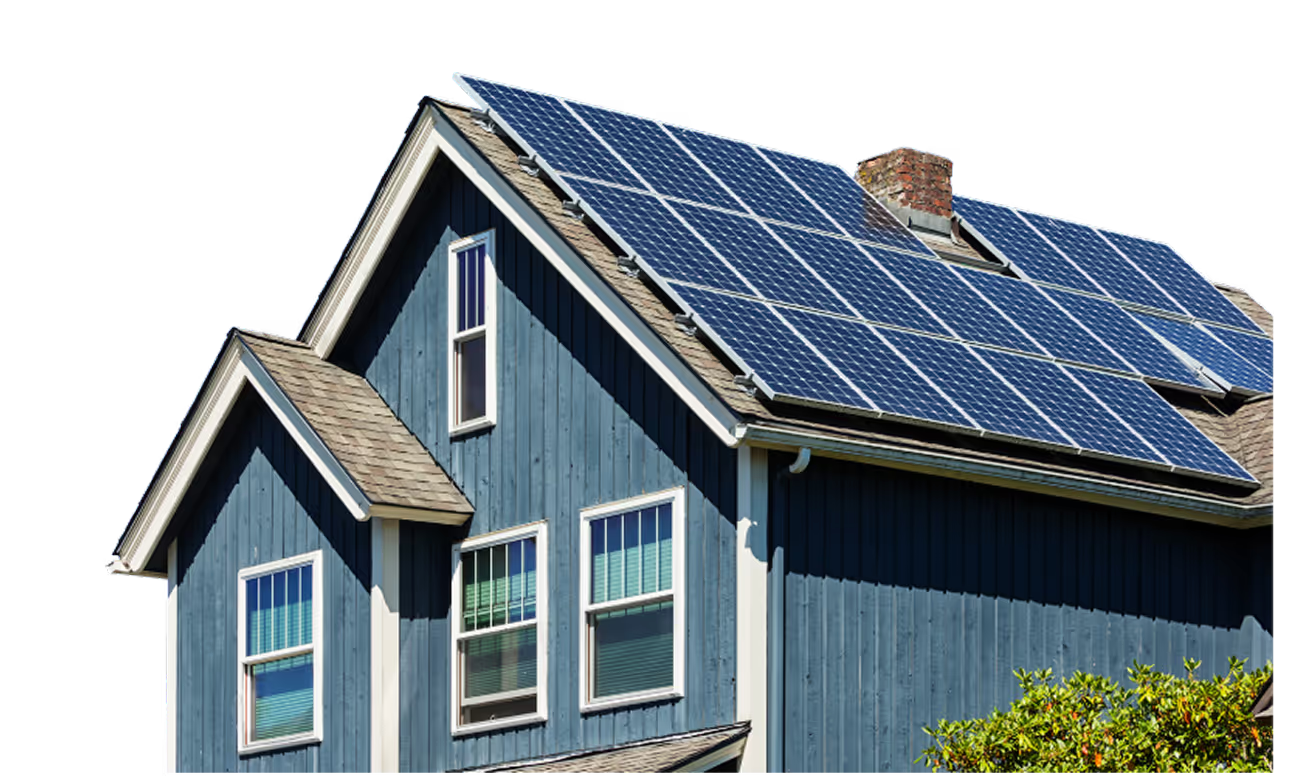
Rooftop solar does not usually change how likely your house is to be struck. It does add metal mounting frames and direct-current (DC) cabling on the roof, so a proper installation grounds and bonds the frames includes surge protection on both the DC side (panels) and the AC side (your home's wiring).
Many modern solar inverters have built-in surge protection, but confirm the exact specifications with your installer. If your house already has rooftp[lightning protection system, ask the installer to check how the panels fit within it. Solar panels do not normally need a rooftop rod of their own.
Frequently Asked Questions
Is a Lightning Arrester Compulsory for Houses in Malaysia?
ST requires any lightning protection system in a building to follow MS IEC 62305, and whether you need a surge protective device depends on a risk assessment. Ask a registered electrical contractor to check what applies to your home.
Where Is a Lightning Surge Arrester Installed?
Usually inside the distribution board, connected between the incoming supply and earth. Type 3 arresters go at individual sockets.
How Long Does an Electrical Arrester Last?
There is no fixed lifespan, because it depends on how many surges the device absorbs. Many DB arresters have a status window that changes when the module is spent. Check it after major storms and replace the module when it shows wear.
Can I Install a Lightning Arrester Myself?
No. A rooftop system must be designed and installed to MS IEC 62305, and a surge arrester involves working inside your DB. You will need a registered electrical contractor to handle both.
Effective lightning protection comes from good design, not from how visible the hardware is. For most homes, a surge arrester in the DB and a well-tested earthing system are the sensible first layers for air conditioners, water heaters and electronics. Rooftop protection is mainly for tall, exposed or isolated houses, and it must be designed to MS IEC 62305.
And while you are looking at your roof, consider what else it could do for you. The same tropical weather that brings these storms also brings plenty of sun. Check your solar savings in minutes with our free solar calculator, or chat with the team on WhatsApp whenever you're ready.

Rent-to-Own Solar. RM0 Upfront cost. Guaranteed Savings
Immediate ROI



Rent-to-Own Solar. RM0 Upfront cost. Guaranteed Savings
(10-Year RTO plan)
+ 10-Year Free Maintenance

Be part of The Solar Collective, where we share the latest updates, tips, and discussions on solar energy.